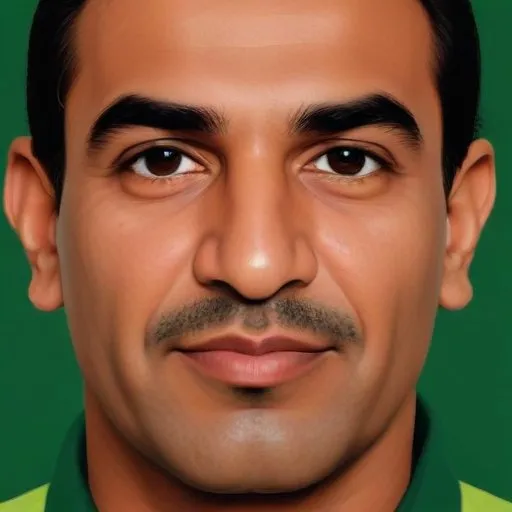
Aamer Sohail: The Pakistani Cricket Legend
A Born Champion
Aamer Sohail, born on September 14, 1966, is a Pakistani cricket commentator and former cricketer who rose to fame with his exceptional skills on the field. He is best known for being a part of the Pakistani squad that won the 1992 Cricket World Cup in Australia and New Zealand.
Aggressive Opening Batsman
Sohail was an aggressive lefthanded opening batsman and occasional left-arm spin bowler. During his playing career, which spanned ten years, he played in 195 first-class and 261 List A Limited Overs matches, including 47 Test matches and 156 One Day Internationals (ODIs) for Pakistan.
Award-Winning Performances
In ODIs, Sohail won 14 Player of the Match awards out of 156 matches, thus winning a Player of the Match (POTM) every 11.1 matches. This impressive ratio is the highest for Pakistan among retired players, just behind his opening partner
Saeed Anwar, who won 28 POTM awards in 247 matches.
Domestic Career
Sohail made his first-class debut in 1983 and went on to play for various teams, including the Pakistan national team.
International Career
In 1990, Sohail made his international debut in a One Day International (ODI) against Sri Lanka. He enjoyed a successful international career, playing a crucial role in Pakistan's victory in the 1992 Cricket World Cup.
Captaincy and Leadership
Sohail captained Pakistan in six Tests in 1998, becoming the first Pakistani captain to defeat South Africa in a Test match. He led Pakistan through 22 One Day Internationals from 1996 to 1998, winning nine and averaging 41.5 with the bat.
Controversies and Memorable Moments
Sohail was involved in a few controversies throughout his career, but one of the most memorable moments was when he told
Ian Botham that he might want to send his mother-in-law to bat, referring to Botham's statement that he wouldn't send even his mother-in-law to Pakistan, after Botham was controversially given out for nought in the 1992 World Cup final.
Post-Retirement and Commentary Career
After retiring from cricket, Sohail went on to become a successful cricket commentator, providing his expertise and insights to audiences around the world.
Legacy and Impact
Aamer Sohail's contributions to Pakistani cricket are undeniable. He inspired a generation of cricketers with his aggressive style of play and exceptional leadership skills. His legacy continues to inspire and motivate young cricketers in Pakistan and beyond.
- Aamer Sohail's career statistics: 47 Tests, 156 ODIs, 14 Player of the Match awards, and a highest ratio of winning POTM awards in ODIs for Pakistan among retired players.
- Sohail was part of the Pakistani squad that won the 1992 Cricket World Cup.
- He captained Pakistan in six Tests and 22 One Day Internationals.
- Sohail is now a renowned cricket commentator, sharing his expertise with audiences worldwide.
FAQ
What is Aamer Sohails cricket career highlights?
Aamer Sohail is a former Pakistani cricketer who played as a left-handed batsman and a left-arm medium-pace bowler. He was a key player in Pakistans World Cup-winning team in 1992.
How did Aamer Sohail fare as a cricket captain?
Aamer Sohail captained the Pakistani cricket team from 1994 to 1996 and led the team to several victories, including a Test series win against Australia in 1994.
What is Aamer Sohails post-cricket career like?
After retiring from cricket, Aamer Sohail ventured into politics and became a member of the Pakistani National Assembly from 2002 to 2007. He has also worked as a cricket commentator and analyst.
How does Aamer Sohail contribute to Pakistani cricket development?
Aamer Sohail has been involved in various cricket development initiatives in Pakistan, including coaching and mentoring young players. He has also worked with the Pakistan Cricket Board to improve the sports infrastructure in the country.
What are Aamer Sohails views on modern cricket?
As a cricket analyst and commentator, Aamer Sohail provides insightful views on modern cricket. He has spoken about the importance of adapting to changing cricket formats and the need for batsmen to be more proactive in their approach.