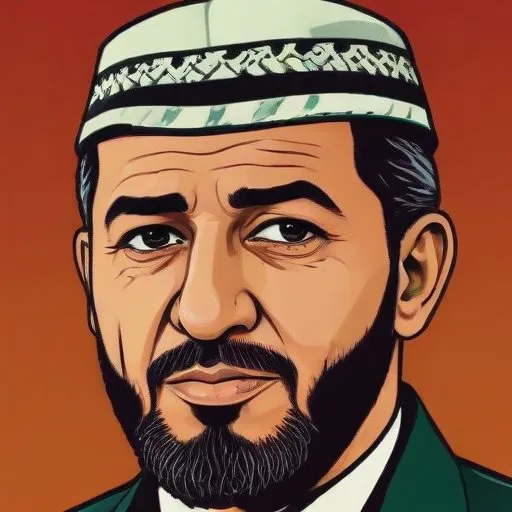
Abdel Aziz al-Rantisi: The Palestinian Political Leader and Co-Founder of Hamas
A Life of Defiance and Resistance
Abdel Aziz al-Rantisi was a Palestinian political leader and co-founder of Hamas, one of the most prominent and influential Palestinian organizations. Alongside Sheikh Ahmed Yassin, al-Rantisi played a crucial role in shaping the organization's ideology and strategy, earning him recognition as a key figure in the Palestinian resistance movement.
Early Life and Education
Born on October 23, 1947, in Yibna, Mandatory Palestine, al-Rantisi's life was marked by displacement and violence. During the 1948 Arab-Israeli War, his family was forced to flee or was expelled by Zionist militias to the Gaza Strip. This traumatic event had a profound impact on al-Rantisi, shaping his worldview and informing his future actions.
In 1956, at the age of nine, al-Rantisi witnessed the Khan Yunis massacre, in which Israeli soldiers killed hundreds of Palestinians in the Gaza Strip. This event, including the killing of his uncle in front of him, left an indelible mark on al-Rantisi, solidifying his commitment to the Palestinian cause.
Al-Rantisi pursued higher education in Egypt, where he studied pediatric medicine and genetics at Alexandria University. He graduated first in his class and became a member of the Muslim Brotherhood, a pan-Islamic organization that shared his commitment to social justice and Islamic values.
Rise to Prominence
Upon returning to Gaza in 1976, al-Rantisi taught parasitology and genetics at the Islamic University of Gaza. During the First Intifada against the Israeli occupation in 1988, he emerged as a popular organizer and leader, playing a pivotal role in the formation of Hamas.
Al-Rantisi's leadership and charisma propelled him to the forefront of Palestinian politics. He became Hamas's political leader and spokesman in the Gaza Strip, following the Israeli killing of Sheikh Ahmed Yassin in March 2004.
Philosophical Contributions and Beliefs
Al-Rantisi was known for his unwavering commitment to the creation of a Palestinian state, encompassing the entirety of the State of Israel. He advocated for military action against Israel, rejecting any compromise that would threaten Palestinian sovereignty.
Al-Rantisi's beliefs were rooted in Islamic values and a deep-seated sense of Palestinian nationalism. He saw the struggle for Palestinian independence as a sacred duty, one that required sacrifice and perseverance in the face of overwhelming odds.
Assassination and Legacy
On April 17, 2004, the Israeli Air Force assassinated al-Rantisi, firing Hellfire missiles from an AH-64 Apache helicopter at his car. His death was met with widespread outrage and mourning throughout the Palestinian territories.
Despite his untimely death, al-Rantisi's legacy endures. He remains a powerful symbol of Palestinian resistance and defiance, inspiring generations of Palestinians to continue the struggle for independence and self-determination.
Key Quotes and Sayings
- "We will not stop until we have liberated our land, until we have ended the occupation, and until we have established a Palestinian state."
- "The Palestinian people will not be defeated. We will not be intimidated. We will continue to resist until we achieve our goals."
Historical Context and Comparative Analysis
Al-Rantisi's life and legacy must be understood within the context of the Israeli-Palestinian conflict and the broader Middle Eastern landscape. His rise to prominence and eventual assassination reflect the enduring struggle for Palestinian independence and the complexities of the region's geopolitics.
In comparison to contemporaries like Sheikh Ahmed Yassin, al-Rantisi's leadership style and ideology were distinct, reflecting his unique blend of Islamic values and Palestinian nationalism.
Personal Milestones and Key Life Events
- 1947: Born in Yibna, Mandatory Palestine
- 1948: Family forced to flee or expelled by Zionist militias to the Gaza Strip
- 1956: Witnessed the Khan Yunis massacre, including the killing of his uncle
- 1976: Returned to Gaza to teach at the Islamic University of Gaza
- 1988: Emerged as a leader during the First Intifada
- 2004: Became Hamas's political leader and spokesman in the Gaza Strip
- 2004: Assassinated by the Israeli Air Force
Trivia and Fun Facts
- Al-Rantisi was known for his charisma and oratory skills, earning him the respect and admiration of his peers.
- He was a skilled pediatrician and genetics expert, reflecting his commitment to education and social welfare.
Influence on Modern Society
Al-Rantisi's life and legacy continue to shape the Palestinian national movement, inspiring generations of Palestinians to resist occupation and fight for independence. His unwavering commitment to Palestinian sovereignty and self-determination serves as a powerful symbol of resistance against oppression.
While his methods and beliefs remain contentious, al-Rantisi's dedication to the Palestinian cause is undeniable, cementing his place as a pivotal figure in the ongoing struggle for Palestinian independence.