


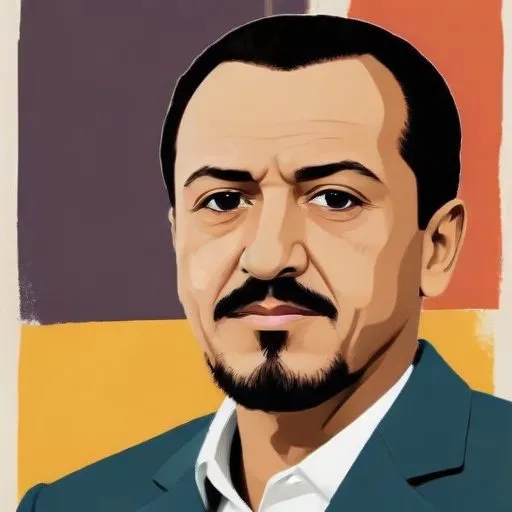
Turkish journalist and activist who advocated for human rights, democracy, and freedom of speech, particularly in the context of Turkey's political climate.
Abdi İpekçi, a renowned Turkish journalist, intellectual, and human rights activist, left an indelible mark on the world of journalism and beyond. As the editor-in-chief of one of Turkey's most prominent daily newspapers, Milliyet, İpekçi fearlessly advocated for the separation of religion and state, human rights, and dialogue between Turkey and Greece, earning him international recognition and respect.
Born on August 9, 1929, in Istanbul, Turkey, İpekçi came from a wealthy and influential Sabbatean-Dönmeh Alevi-Bektashi family from the Karaka denominational sect, originally from Salonica. He completed his high school education at Galatasaray High School in 1948 and briefly attended law school at Istanbul University.
İpekçi began his journalism career as a sports reporter for Yeni Sabah and later Yeni İstanbul. In 1954, he joined Milliyet as its publishing manager and eventually rose to the position of editor-in-chief in 1959. Throughout his career, İpekçi remained committed to his principles, speaking truth to power and challenging the status quo.
A respected journalist, İpekçi was known for his progressive views, advocating for left-leaning causes and groups outside of the mainstream secularist, center-leftist, and Kemalist Republican People's Party. He continuously criticized political extremism, which fueled violent polarization in Turkey during the 1970s.
On February 1, 1979, İpekçi's life was tragically cut short. Two members of the ultranationalist Grey Wolves, Oral Çelik and Mehmet Ali Ağca, assassinated him in his car on the way back home from his office in Istanbul. Ağca, who later attempted to assassinate Pope John Paul II, was caught and sentenced to life in prison.
İpekçi's murder sent shockwaves throughout Turkey and the international community, with many condemning the brutal act as an attack on freedom of the press and human rights. His legacy, however, continues to inspire generations of journalists, activists, and intellectuals, serving as a beacon of courage and conviction in the face of adversity.
İpekçi's philosophical contributions lie in his unwavering commitment to human rights, democracy, and the importance of a free press. He believed in the power of journalism to shape public opinion and bring about positive change. His advocacy for dialogue and conciliation between Turkey and Greece demonstrated his dedication to peaceful conflict resolution.
İpekçi's work and legacy have been recognized with numerous awards and honors. In 1979, he posthumously received the Golden Pen of Freedom Award, conferred by the International Federation of Journalists. His name has been etched in the annals of Turkish journalism, serving as a shining example of journalistic integrity and courage.
İpekçi's impact on modern society extends beyond the realm of journalism. His courageous stance against political extremism and his advocacy for human rights have inspired countless individuals to stand up against injustice and fight for a more equitable world.
In conclusion, Abdi İpekçi's life and legacy serve as a powerful reminder of the importance of a free press, human rights, and dialogue in promoting peaceful conflict resolution and social change. His untimely death has not silenced his voice, and his contributions continue to inspire and motivate future generations of journalists, activists, and intellectuals.
84 Years Old
A renowned Turkish journalist and author, known for his in-depth reporting on Turkish politics and international affairs, particularly on the Middle East and the European Union.
72 Years Old
A Turkish journalist who advocated for Armenian-Turkish reconciliation and was assassinated in 2007, sparking widespread outrage and protests. He's known for his courageous stance against nationalist sentiment and his efforts to promote dialogue and understanding.
65 Years Old
A Turkish journalist and author who was arrested and later fled Turkey after publishing footage of Turkish intelligence trucks transporting weapons to Syrian rebels, sparking a national controversy. He is known for his courageous investigative reporting and advocacy for press freedom.
