


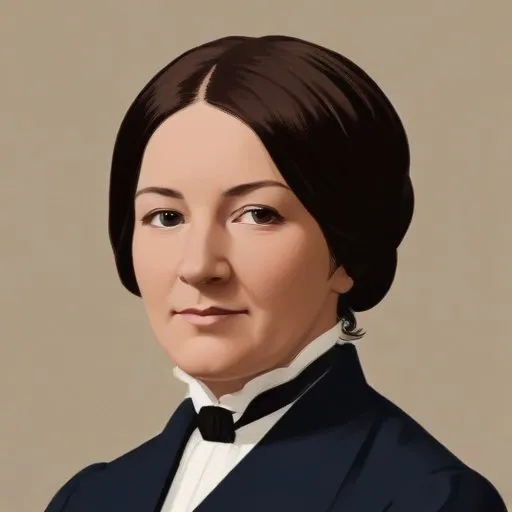
The wife of the 14th President of the United States, she was a former teacher and established the first White House library. She was also known for her strong support of education and women's rights.
Abigail Fillmore, the wife of President Millard Fillmore, is best known for establishing the first White House Library, a testament to her lifelong passion for literature. During her tenure as First Lady from 1850 to 1853, she created a literary salon in the White House, fostering a culture of intellectual curiosity and refinement.
Born on March 13, 1798, in Stillwater, New York, Abigail Powers was the youngest of seven children. She began her teaching career at the tender age of 16, taking on Millard Fillmore, two years her junior, as a student. Their pupil-teacher relationship blossomed into romance, and they married in 1826. Even after marriage, Abigail continued to teach until the birth of their son, Millard Powers Fillmore, in 1828.
As Millard Fillmore's political career advanced, Abigail accompanied him to Albany, New York, and Washington, D.C., where she became involved in local social life. In 1849, she became the Second Lady of the United States after her husband was elected Vice President on the Whig Party presidential ticket. When Millard succeeded to the presidency in 1850, Abigail became the First Lady of the United States.
The establishment of the White House Library was Abigail's most notable achievement as First Lady. The library served as a popular reception room, hosting literary salons and fostering a love for reading among the nation's elite. Abigail's appreciation for literature was contagious, and her influence extended beyond the White House walls, inspiring a cultural shift towards intellectual pursuits.
Abigail was more than just a devoted wife and First Lady; she was a trusted advisor and confidante to her husband. Millard often sought her opinion on state affairs, valuing her insight and counsel. Despite her limited involvement in White House hosting duties due to health issues, Abigail's presence was felt throughout the presidency.
Abigail's life was tragically cut short when she died of pneumonia on March 30, 1853, just weeks after the end of her tenure as First Lady. Her legacy, however, endures, and her contributions to American cultural and intellectual life remain a testament to her enduring impact.
Despite her significant achievements, Abigail Fillmore has received little historical attention, and many of her correspondences have been lost to time. However, her pioneering work in establishing the White House Library has left a lasting legacy, inspiring future generations of Americans to cherish literature and intellectual pursuits.
Abigail Fillmore's remarkable life serves as a testament to the power of education, literature, and intellectual curiosity. Her lasting legacy continues to inspire Americans to this day, and her contributions to American cultural and intellectual life will forever be remembered.
Born in 1800
The 13th President of the United States, a member of the Whig party, is known for being a compromise candidate and signing the Compromise of 1850, which attempted to address the issue of slavery in new states. He's also notable for being one of the lesser-known presidents in U.S. history.
Born in 1767
The wife of the seventh U.S. President, she was a strong supporter of her husband's political career and played a significant role in shaping his public image. She was also known for her kindness and generosity to the poor and slaves.
