


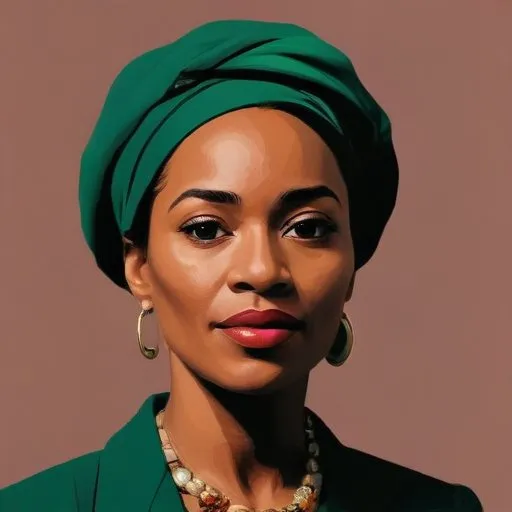
A pioneering figure in Sierra Leone's cultural nationalism movement, advocating for the preservation and promotion of Creole culture and identity. She's most known for her tireless efforts to elevate the status of Creole people and their heritage.
Adelaide Casely-Hayford, née Smith, was born on June 2, 1868, in Freetown, British Sierra Leone, to an elite family of mixed racial heritage. Her father, William Smith Jr., was of English and royal Fante parentage from the Gold Coast, while her mother, Anne Spilsbury, was a Creole of English, Jamaican Maroon, and Sierra Leone Liberated African ancestry.
Casely-Hayford's early life was marked by a strong emphasis on education, which would later become a cornerstone of her advocacy. She attended Jersey Ladies College (now Jersey College for Girls) in England, where she was exposed to Victorian values and ideas of family and gender roles. Her education and upbringing had a profound impact on her worldview, shaping her ideals and informing her later activism.
Casely-Hayford's commitment to public service was evident in her tireless advocacy for women's education and cultural nationalism. She traveled extensively, studying music at the Stuttgart Conservatory in Germany and later opening a boarding home for African bachelors living in England as students or workers.
In 1923, she founded the Girls' Vocational and Training School in Freetown, Sierra Leone, with the aim of instilling cultural and racial pride in young Sierra Leoneans under colonial rule. This institution became a beacon for female empowerment and a testament to Casely-Hayford's dedication to the development of her people.
Casely-Hayford's passion for cultural nationalism was instrumental in shaping her advocacy and activism. She believed in the importance of preserving and promoting African cultural heritage, particularly in the face of colonialism and imperialism.
In 1925, she caused a stir by wearing traditional African attire to attend a reception in honor of the Prince of Wales, a bold statement that demonstrated her commitment to cultural pride and self-identification.
Casely-Hayford's work was deeply intertwined with feminist and Pan-Africanist politics. She was an early advocate for women's rights and education, recognizing the critical role that women played in shaping society.
Her Pan-Africanist ideals led her to emphasize the importance of unity and solidarity among African peoples, both on the continent and in the diaspora. Through her work, she helped to popularize Pan-Africanist and feminist politics in the early 1900s, inspiring a new generation of activists and intellectuals.
Adelaide Casely-Hayford's legacy is one of dedication, passion, and perseverance. Her commitment to cultural nationalism, women's education, and Pan-Africanist politics has left an indelible mark on Sierra Leonean society and beyond.
Today, she is remembered as a pioneering figure in the struggle for women's empowerment and cultural heritage, inspiring future generations to continue her work and build upon her legacy.
Born in 1758
Leader of the Haitian Revolution, defeating French colonizers and establishing Haiti as the first independent black nation in 1804. Known for his military prowess and abolition of slavery.
