


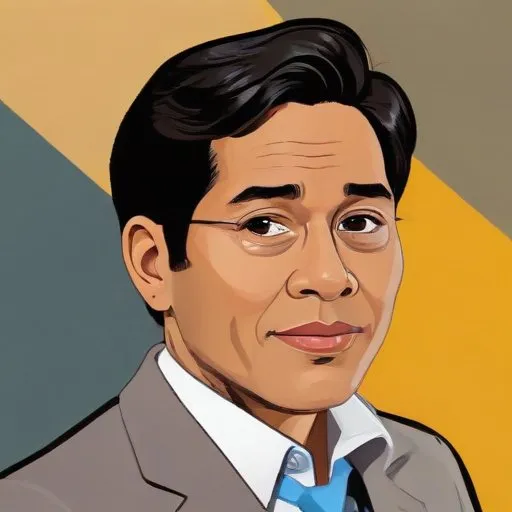
A Filipino journalist and author who wrote extensively on politics, history, and culture, and is known for his critical and insightful writings on Philippine society.
Adrian Cristobal was a Filipino writer, playwright, and essayist known for his thought-provoking works that frequently touched on political and historical themes. He is perhaps best remembered for his popular Breakfast Table newspaper column, which showcased his wit and satire.
Cristobal was born on February 20, 1932, and began his writing career at a young age. By 15, he had already won literary prizes for his fiction, and by 17, his byline was appearing in leading newspapers such as the Manila Chronicle. He studied at the University of the East but dropped out of college.
Cristobal was affiliated with a group of writers based in U.P. Diliman known as the Ravens. In 1960, he won the Second Prize in the One-Act Play English category at the Palanca Awards for his satirical play "The Largest Crocodile in the World." Unfortunately, all copies of the play were lost, reportedly due to the initiative of the politician believed to be depicted in the work.
In 1983, Cristobal won the Second Prize in the essay category at the Palanca Awards. He also authored two books on the national hero Andres Bonifacio, titled "The Tragedy of the Revolution" and "The Trial."
In 1962, Cristobal was contracted to write the screenplay for Gerardo de Leon's film adaptation of "El Filibusterismo," for which he won a FAMAS award for Best Screenplay. During the administration of President Ferdinand E. Marcos, Cristobal headed the speechwriting office of the Office of the President.
Upon his death on December 22, 2007, a Resolution was proposed in the Philippine Senate, citing Cristobal as a prolific journalist, political satirist, historical writer and lecturer, well-respected columnist, brilliant fictionist and essayist, creative playwright, literary genius, and hardworking publisher.
Cristobal's works often touched on themes of politics, history, and social commentary. Through his writing, he encouraged critical thinking and challenged the status quo. His satire and wit continue to inspire and influence generations of Filipino writers and thinkers.
As we reflect on Cristobal's remarkable life and career, we are reminded of the power of writing to shape our understanding of the world and ourselves. His legacy serves as a testament to the importance of free expression, creativity, and intellectual curiosity.
While there are no recorded quotes from Cristobal, his writing continues to speak volumes about his sharp wit, clever satire, and commitment to telling the truth.
Born in 1924
A renowned Filipino writer and journalist, known for his novels and short stories that explore the country's history, culture, and social issues, offering a unique perspective on the Filipino experience.
Born in 1915
A celebrated Filipino literary figure, known for his poignant and thought-provoking works that explored the human condition, love, and social justice. His writings continue to inspire and influence Filipino literature and culture.
