


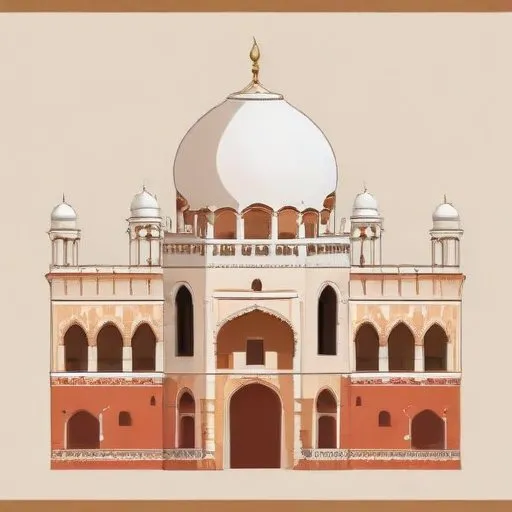
The ruler of Hyderabad, a wealthy and powerful Indian princely state, known for his modernizing reforms and extravagant lifestyle, including building the famous Falaknuma Palace.
AfzaludDaulah, Asaf Jah V, the eighth Nizam of Hyderabad, India, is renowned for his progressive reforms and contributions to education, healthcare, and infrastructure development in the region. During his reign from 1857 to 1869, he established institutions that continue to shape the city's identity and influence modern society.
Asaf Jah V divided his realm into five subahs and sixteen districts, each headed by a Subedar and Taluqdar respectively, to ensure efficient governance. He also set up a central treasury in 1855 and reformed the revenue and judicial systems, introducing a postal service and constructing the first rail and telegraph networks.
The Nizam founded the Hyderabad Medical School (HMS) in 1846, which later became the prestigious Osmania Medical College. He also established Darul-Uloom, the first regular educational institution of Hyderabad, in 1854. These institutions have produced numerous notable alumni and contributed significantly to the region's intellectual and cultural growth.
AfzaludDaulah took initiatives to cater to the needs of pilgrims from Hyderabad State traveling for Hajj to Mecca. He purchased a building, known as the Nizam's Rubath, which initially consisted of 42 buildings, but was later reduced to three due to the expansion of the Grand Mosque.
Asaf Jah V was born on October 11, 1827, to Nasiruddawlah, Asaf Jah IV Mir Farqunda Ali Khan and DilawarunNisa Begum. He was married thrice, to Mahbub Begum, Hussaini Begum, and Allah Rakhi Begum, and had three sons and a daughter. He passed away on February 26, 1869, leaving behind a legacy of progress and development.
In 1861, Asaf Jah V was awarded the Star of India for his contributions to the region's growth and development.
The reforms and institutions established by AfzaludDaulah, Asaf Jah V, continue to shape Hyderabad's identity and influence modern society. His vision for education, healthcare, and infrastructure development has inspired generations of leaders and citizens, making him a celebrated figure in Indian history.
