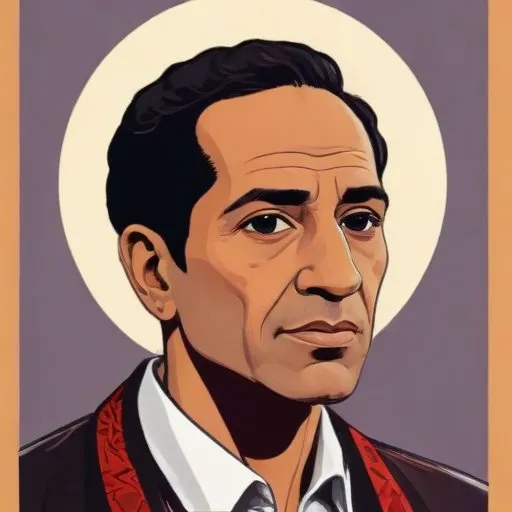
Ahmed Fouad Negm: The Revolutionary Voice of Egyptian Poetry
The Patriotic Poet of the People
Ahmed Fouad Negm, affectionately known as "El-Fagumi," was a prolific Egyptian vernacular poet whose patriotic and revolutionary works resonated deeply with the Egyptian people. With a career spanning over six decades, Negm's poetry became synonymous with the struggles and triumphs of modern Egypt, earning him a revered place in the nation's literary canon.
Early Life and Inspirations
Born on May 22, 1929, in a small village north of Cairo, Negm's humble beginnings belied his future literary greatness. His father, Mohammed Ezat Negm, a police officer, and his mother, Hanem Morsi Negm, a homemaker, instilled in him a love for education and the arts. Negm's early education at the traditional Kutaab schools, managed by El-Azhar, laid the foundation for his later literary pursuits.
Tragedy struck when Negm was just six years old; his father's passing forced him to live with his uncle in Zagazig. Later, he was placed in an orphanage, where he met the renowned singer Abdel Halim Hafez. This experience would later influence his poetry, which often addressed the struggles of the common man.
The Poet's Journey
At 17, Negm left the orphanage and returned to his village, working as a shepherd. He later moved to Cairo to live with his brother, but was eventually forced to return to his village again. During this period, he worked in an English camp, participating in guerrilla operations against British occupation. After the Egyptian-British agreement, Negm was appointed as a laborer in mechanical workshops, where his writing talent was discovered.
Imprisonment and Breakthrough
In 1953, Negm was imprisoned for three years on charges of counterfeiting. During his incarceration, he participated in a writing competition organized by the Supreme Council for the Arts and won first place. This milestone marked the beginning of his literary career, as his first collection,
Pictures from Life and Prison, was published in vernacular Egyptian Arabic. The book's success was largely due to Suhair El-Alamawi's introduction, which brought Negm's work to the attention of a wider audience.
Collaboration and Legacy
Upon his release, Negm was appointed as a clerk in the organization for Asian and African peoples. He began collaborating with Egyptian composer Sheikh Imam, creating a body of work that remains unparalleled in Egyptian literature. Their partnership produced some of the most iconic and patriotic songs in Egyptian history, cementing Negm's status as a folk hero.
Throughout his life, Negm's poetry addressed themes of social justice, freedom, and national pride. His unique blend of colloquial Arabic and poetic flair resonated with the masses, making him a beloved figure in Egyptian cultural circles.
Influence and Impact
Negm's influence extends beyond the realm of literature, as his poetry inspired generations of Egyptians to strive for a better future. His legacy is a testament to the power of art to shape national identity and fuel social change.
Today, Ahmed Fouad Negm's poetry continues to be celebrated and studied, offering a glimpse into the soul of Egypt's modern history. His remarkable life and works serve as a beacon of hope, inspiring future generations to use their voices for the betterment of society.
Quotes and Memorable Sayings
- "The revolution is not just a revolt, but a rebirth." - Ahmed Fouad Negm
- "We are not just Egyptians, we are the sons and daughters of the Nile." - Ahmed Fouad Negm
Legacy and Cultural Significance
Ahmed Fouad Negm's life and works have left an indelible mark on Egyptian culture. His poetry serves as a testament to the power of art to inspire social change and national pride. As a champion of the people, Negm's legacy continues to inspire future generations to pursue justice, freedom, and equality.