


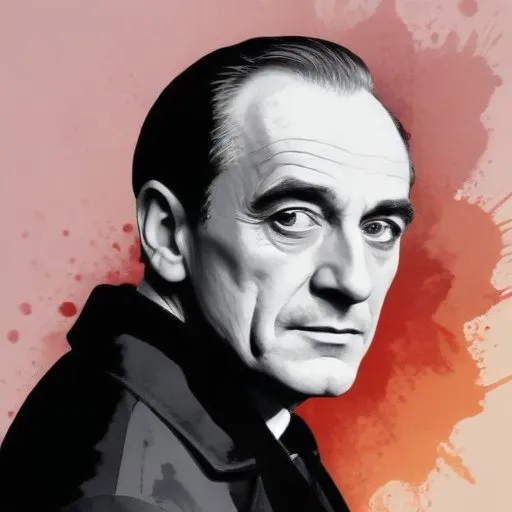
A renowned stage and screen actor, known for his intense, nuanced performances in German and international productions, particularly in the 1920s and 1930s.
Renowned for his electrifying performances on stage and screen, Albert Bassermann was one of the most celebrated German-speaking actors of his generation, leaving an indelible mark on the world of theatre and cinema. He was the proud recipient of the prestigious Iffland Ring, a testament to his outstanding contributions to the performing arts.
Born on September 7, 1867, in Mannheim, Germany, Bassermann's fascination with the world of theatre began at a young age. He initially pursued chemistry at the Technical University of Karlsruhe, but his true calling soon took over. In 1887, he embarked on his acting career at the Meiningen Court Theatre, where he honed his craft for four years.
In 1909, Bassermann married the love of his life, actress Elsa Schiff, with whom he frequently shared the stage. Their partnership extended beyond the realm of romance, as they collaborated on numerous productions, their chemistry on stage mirroring their love off stage.
Bassermann's big break came when he joined Otto Brahm's theatre company in 1899. This marked the beginning of his ascension to stardom, as he went on to work with some of the most prominent figures in German theatre, including Max Reinhardt. His performances in iconic roles such as Othello, Faust, and Shylock cemented his reputation as a master of the craft.
In 1913, Bassermann became one of the first German theatre actors to venture into the world of film, starring in Max Mack's "Der Andere" (The Other). He continued to work with renowned film directors, including Richard Oswald, Ernst Lubitsch, and Leopold Jessner, further solidifying his status as a versatile performer.
In 1933, following the rise of the Nazi regime, Bassermann left Germany and eventually settled in the United States in 1938. Despite the challenges of exile, he continued to astound audiences with his performances, earning international acclaim and admiration.
Albert Bassermann's remarkable career spanned over five decades, leaving behind a rich legacy in the world of theatre and cinema. He inspired generations of actors, and his contributions continue to influence contemporary performers. His story serves as a testament to the power of passion, perseverance, and creativity in the face of adversity.
Bassermann's own words, "The art of acting is not just about playing a role, but about living it," encapsulate the essence of his remarkable journey. As we reflect on his life and career, we are reminded of the transformative power of art to transcend borders, cultures, and generations.
Born in 1901
A glamorous and androgynous Hollywood icon, known for her sultry voice, striking features, and trailblazing gender-bending style on screen. She mesmerized audiences with her unique blend of European sophistication and American charm.
Born in 1905
A legendary actress who captivated audiences with her iconic performances on the silver screen, earning her the title of Hollywood's first female superstar.
Born in 1899
Iconic leading man of classic Hollywood cinema, starring in timeless films like Casablanca and The African Queen, embodying a tough, charismatic on-screen presence.
Born in 1915
A legendary actress who captivated audiences with her natural, emotional performances in films like "Casablanca" and "Autumn Sonata", earning her three Academy Awards.
Born in 1908
Iconic leading man of Hollywood's Golden Age, starring in classics like "It's a Wonderful Life" and "Rear Window", bringing everyman charm to cinematic legends.
Born in 1905
Iconic actor of Hollywood's Golden Age, starring in classics like "The Grapes of Wrath" and "On Golden Pond", earning him two Oscars and a lifetime of critical acclaim.
Born in 1900
Academy Award-winning star of Hollywood's Golden Age, known for iconic on-screen partnership with Katharine Hepburn and memorable roles in classics like "Inherit the Wind" and "Guess Who's Coming to Dinner".
Born in 1907
A legendary actress who won four Academy Awards and starred in iconic films like "The Philadelphia Story" and "On Golden Pond", known for her fierce independence and spirited on-screen presence.
