


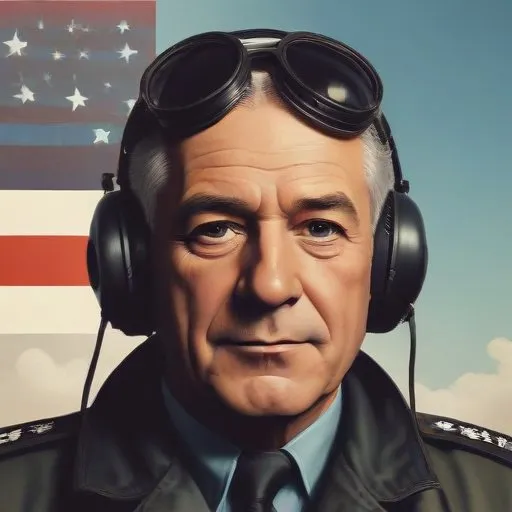
Pioneering test pilot and engineer who flew the X-15, a rocket-powered aircraft, to the edge of space, paving the way for modern spaceflight.
On October 2, 1921, a trailblazer was born – Albert Scott Crossfield, the first pilot to fly at twice the speed of sound and one of the most celebrated test pilots in aviation history. With a career spanning over three decades, Crossfield left an indelible mark on the world of aerodynamics, pushing the boundaries of human achievement in the skies.
Born in Berkeley, California, Crossfield grew up in southern California and rural southwest Washington, where his love for flying took root. He attended the University of Washington in Seattle, earning his Bachelor of Science and Master of Science degrees in aeronautical engineering in 1949 and 1950, respectively.
During World War II, Crossfield served with the U.S. Navy as a flight instructor and fighter pilot, flying the F6F Hellcat and F4U Corsair fighters, as well as SNJ trainers. His exceptional skills in the cockpit earned him a reputation as a daredevil pilot, always pushing the limits of what was thought possible.
In 1953, Crossfield made history by becoming the first pilot to fly at twice the speed of sound, reaching an astonishing Mach 2.0 in the Douglas D-558-II Skyrocket. This groundbreaking achievement cemented his status as a pioneer in supersonic flight.
In 1955, Crossfield became one of the first pilots to fly the North American X-15, an experimental spaceplane jointly operated by the United States Air Force and NASA. As one of the 12 elite pilots who flew the X-15, Crossfield played a crucial role in shaping the future of space exploration.
Throughout his career, Crossfield emphasized the importance of risk-taking and innovation in pushing the boundaries of human achievement. He believed that "the greatest danger is not taking the risk" and that "the only way to do great work is to love what you do."
Crossfield married Alice Virginia Knoph in 1943, and they had one son, Paul Stanley Crossfield. He passed away on April 19, 2006, leaving behind a legacy that continues to inspire generations of engineers, pilots, and innovators.
Albert Scott Crossfield's groundbreaking achievements in supersonic flight paved the way for the development of modern aircraft, spacecraft, and satellite technology. His pioneering spirit and innovative approach to problem-solving continue to influence fields beyond aviation, inspiring new generations of trailblazers.
Albert Scott Crossfield's remarkable life and achievements serve as a testament to the power of human ingenuity, courage, and determination. As a trailblazer in supersonic flight, he left an indelible mark on aviation history, inspiring countless individuals to push the boundaries of what is possible.
Born in 1923
The first test pilot to break the sound barrier, achieving a historic milestone in aviation and paving the way for supersonic flight. This daring feat cemented his status as a legendary figure in the history of flight.
98 Years Old
First person to skydive from the edge of space, setting a record for the highest altitude jump and paving the way for space exploration
96 Years Old
First person to walk on the Moon during the Apollo 11 mission, marking a historic milestone in space exploration.
