


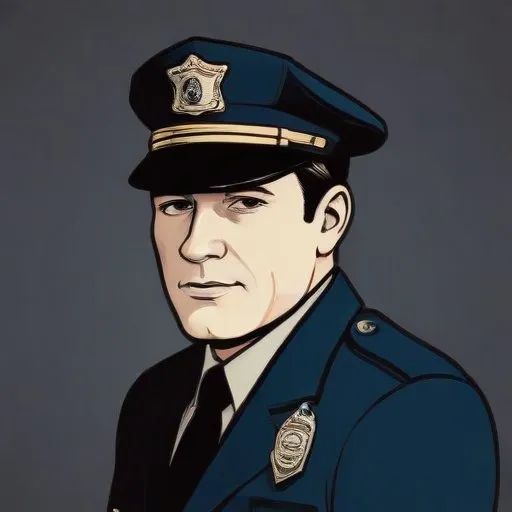
A pioneering police officer who reformed the New York City Police Department's homicide squad, leading to a significant reduction in crime rates. He also wrote a bestselling memoir about his experiences.
Albert Seedman, a stalwart of the New York City Police Department (NYPD), is renowned for his unwavering dedication to justice and his groundbreaking reforms as the Chief of Detectives. During his remarkable 30-year career, Seedman solved some of the city's most high-profile cases, earning him a reputation as a dogged and astute investigator.
Born on August 9, 1918, Seedman's early life paved the way for his future success. His strong work ethic and innate curiosity led him to join the NYPD, where he swiftly rose through the ranks. His early years on the force saw him tackle a range of cases, from petty crimes to homicides, honing his skills and establishing himself as a formidable detective.
Seedman's most notable cases during this period include the Borough Park Tobacco robbery and the Kitty Genovese murder, both of which garnered widespread media attention.
As Chief of Detectives, he revolutionized the department by assigning detectives to specialize in specific crimes, rather than merely responding to cases as they arose. This innovative approach led to improved solving rates and enhanced public trust.
Seedman's tenure as Chief of Detectives was marked by controversy, particularly during the Knapp Commission's corruption investigations. Although Seedman's own integrity remained unblemished, the scandals led to his brief removal from his post. Undeterred, he continued to serve the NYPD with distinction, eventually resigning in 1971.
Seedman's impact on modern law enforcement extends far beyond his notable cases. His reforms and dedication to justice have inspired generations of detectives and police officers. His commitment to transparency and accountability has helped to shape the NYPD into the respected institution it is today.
After retiring from the NYPD, Seedman went on to become the chief of security for a New York area department store chain. Following his second retirement, he relocated to South Florida, where he wrote his memoir, Chief, detailing his time on the force and the high-profile cases he had solved. Seedman also made a cameo appearance in the 1975 film Report to the Commissioner.
Seedman's cigar-chomping, tough-talking persona earned him a reputation as a larger-than-life figure. His wit and candor made him a favorite among reporters, who often quoted him in the press. One colleague likened his style to that of a "Jewish gangster," a testament to his unique blend of grit and charm.
Albert Seedman passed away on May 17, 2013, leaving behind a legacy of justice, reformation, and dedication to the people of New York City. His remarkable story serves as a beacon of inspiration for those who follow in his footsteps, and his contributions to law enforcement continue to shape the NYPD to this day.
90 Years Old
A whistleblower who exposed police corruption in the 1970s, leading to reforms and inspiring a film and TV series about his life.
81 Years Old
The 107th mayor of New York City, a lawyer and politician, is most known for leading the city through the 9/11 attacks and his controversial yet impactful tenure. He's also known for his work in reducing crime rates in NYC.
84 Years Old
A self-made billionaire and former mayor of New York City, known for his philanthropic efforts and innovative approaches to urban governance.
Born in 1896
Australian author and critic, best known for writing the classic mystery novel "Picnic at Hanging Rock", a haunting and atmospheric tale that has become an Australian literary icon.
