


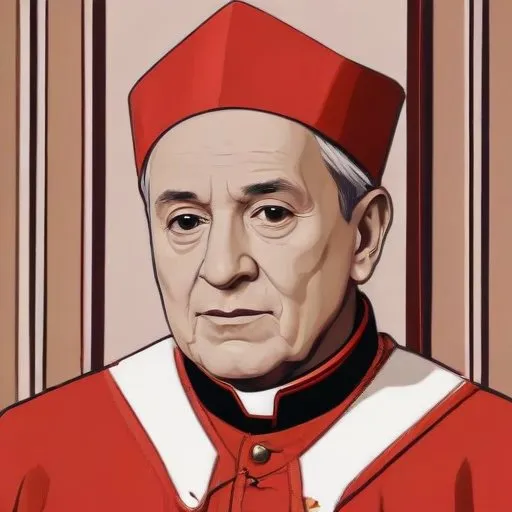
A 17th-century Italian cardinal who played a key role in the Roman Catholic Church, serving as the Bishop of Massa Marittima and later as the Cardinal-Priest of Santa Balbina. He's known for his involvement in several papal conclaves and his efforts to reform the Church.
Alberto Bolognetti, an Italian law professor, bishop, diplomat, and cardinal, is renowned for his pivotal role in persuading King Stephen Báthory to adopt the Gregorian calendar in the Polish-Lithuanian Commonwealth. This monumental feat had far-reaching consequences, synchronizing the calendrical rhythms of Eastern and Western Europe.
Bolognetti was born on July 8, 1538, in Bologna, Italy, to Francesco Bolognetti, a senator and poet, and Lucrezia Fantuzzi. His family was steeped in intellectual pursuits, with his father being a prominent figure in Bologna's literary circles. Bolognetti's brothers, Francesco, Alessandro, and Marcantonio, also followed in their father's footsteps, with Marcantonio becoming a Jesuit.
Bolognetti's academic journey began at the University of Bologna, where he studied under the tutelage of Gabriele Paleotto. He earned his doctorate in law on May 23, 1562, with his father proudly in attendance. Following his graduation, Bolognetti became a cleric in Bologna and later a professor of civil law at the studium of Bologna from 1562 to 1564, and then at Salerno from 1565 to 1574.
In 1574, Pope Gregory XIII, a fellow Bolognese, recognized Bolognetti's exceptional abilities and appointed him protonotary apostolic and Referendary of the Two Signatures. This marked the beginning of Bolognetti's distinguished diplomatic career, which would take him to various regions of Europe. From 1576 to 1578, he served as nuncio to the Grand Duke Francesco I of Florence, where he played a significant role in the baptism of Ferdinando's son, Filippo Cosimo. Subsequently, he was appointed nuncio to the Republic of Venice from 1578 to 1581, during which time he was ordained Bishop of Massa Marittima by Pope Gregory XIII.
One of Bolognetti's most notable achievements was his successful persuasion of King Stephen Báthory to adopt the Gregorian calendar in the Polish-Lithuanian Commonwealth. This milestone event, which took place during his tenure as nuncio to the Polish-Lithuanian Commonwealth, harmonized the calendars of Eastern and Western Europe, fostering greater unity and cooperation between the two regions.
In recognition of his outstanding diplomatic and ecclesiastical services, Bolognetti was promoted to cardinal priest, a distinction he received shortly before his untimely death. Despite his short-lived cardinalate, Bolognetti's legacy as a diplomat, scholar, and champion of calendrical reform continues to inspire generations of scholars and historians.
Through his extraordinary life and achievements, Alberto Bolognetti demonstrated the power of diplomacy, scholarship, and cultural exchange, leaving an indelible mark on the fabric of European history.
Born in 1920
Leader of the Catholic Church from 1978 to 2005, known for helping to end communism in Poland and being a charismatic advocate for human rights and social justice.
99 Years Old
The first pope to resign in nearly 600 years, he's known for his conservative views and efforts to strengthen the Catholic Church's traditional teachings. He's also a prolific writer and theologian.
89 Years Old
The leader of the Catholic Church, known for his progressive stance on social issues and efforts to reform the Church, inspiring millions worldwide.
98 Years Old
A prominent Catholic Church leader who served as Secretary of State and Dean of the College of Cardinals, known for his diplomatic efforts and influential role in the Church's governance.
91 Years Old
A high-ranking Catholic Church official who served as the Vatican's Secretary of State and Camerlengo, playing a key role in the papal transition following Pope John Paul II's death. He was also known for his conservative views and controversies surrounding his leadership style.
83 Years Old
A prominent Catholic Church leader who served as the President of the Pontifical Council for Interreligious Dialogue, fostering greater understanding and cooperation between different faiths.
