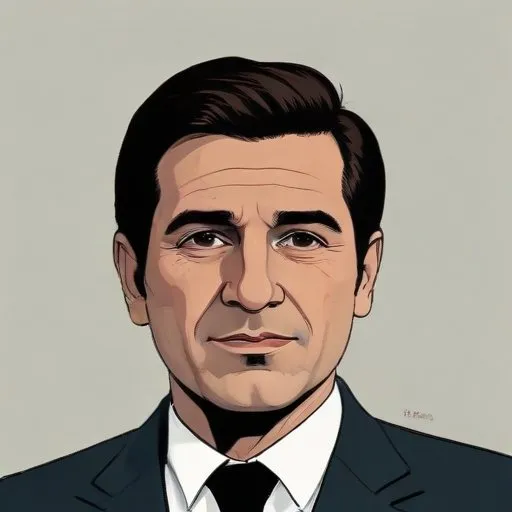
Alberto Breccia: The Maverick of Latin American Comics
a Legendary Career in Comic Book Artistry
Alberto Breccia is renowned as one of the most celebrated and influential comic book artists in the world, particularly in Latin America and Europe. With a career spanning over five decades, Breccia's work has left an indelible mark on the comic book industry, inspiring generations of artists, including the likes of Frank Miller.
Early Life and Education
Born on April 15, 1919, in Montevideo, Uruguay, Breccia moved to Buenos Aires, Argentina, at the tender age of three. After completing his education, Breccia worked in a tripe packing plant before landing a job at the magazine El Resero, where he wrote articles and drew covers in 1938.
Early Career and Influences
Breccia's professional career in comics began in 1939, when he joined the publishing house Manuel Linez. During this period, he worked on various magazines, including TitBits, Ratapln, and El Gorrin, creating popular comic strips such as Mariquita Terremoto, Kid Ro Grande, and El Vengador. Breccia's early work was heavily influenced by the Group of Venice, a collective of expatriate Italian artists, including
Hugo Pratt, Ido Pavone, and Horacio Lalia.
The PanAmerican School of Art and European Ventures
In the 1950s, Breccia, alongside Hugo Pratt, founded the PanAmerican School of Art in Buenos Aires, which became a hub for aspiring comic book artists. During this period, Breccia also worked with European publishers, including the British publishing house Fleetway, where he drew westerns and war stories.
Collaboration with Héctor Germán Oesterheld and Editorial Frontera
In 1957, Breccia joined Editorial Frontera, under the direction of Héctor Germán Oesterheld, where he created several Ernie Pike stories. This collaboration marked a significant turning point in Breccia's career, as it showcased his versatility and range as an artist.
Sherlock Time and International Recognition
Breccia's series Sherlock Time, which debuted in 1958, further solidified his reputation as a master of the medium. This critically acclaimed series, scripted by Oesterheld, demonstrated Breccia's ability to craft engaging narratives and visually stunning artwork.
Personal Life and Legacy
Breccia's personal life was marked by his close relationships with his children, Enrique and Patricia, who also became comic book artists in their own right. Breccia's influence on modern comics is undeniable, with
Frank Miller citing him as one of his personal mentors. Throughout his life, Breccia remained committed to pushing the boundaries of the comic book medium, leaving behind a legacy that continues to inspire generations of artists and readers alike.
Impact on Latin American Comics
Breccia's work played a significant role in shaping the Latin American comic book industry, inspiring a new wave of artists and publishers. His contributions to the medium have been recognized and celebrated throughout the region, cementing his status as a true pioneer in the world of comics.
Quote and Legacy
"I think that the comic strip is a powerful tool for social and political criticism, and that its potential has not yet been fully exploited." – Alberto Breccia
Breccia's legacy extends beyond his own work, as his influence can be seen in the many artists he inspired and the continued growth of the comic book industry. As a testament to his enduring impact, Breccia's work remains a staple of Latin American comic book culture, ensuring that his contribution to the medium will be remembered for generations to come.