


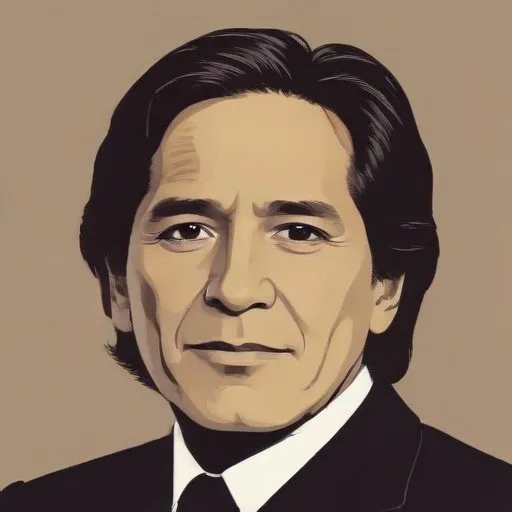
Peruvian economist and politician who served as President of Peru from 2001 to 2006, known for implementing economic reforms and promoting social programs. He's also recognized for his indigenous roots and advocacy for Andean communities.
Alejandro Celestino Toledo Manrique, widely known as Alejandro Toledo, is a Peruvian former politician who made history by serving as the President of Peru from 2001 to 2006. He is renowned for his courageous stance against the authoritarian regime of President Alberto Fujimori, paving the way for democratic reforms in Peru.
Born on March 28, 1946, in Cabana, Peru, Toledo's early life was marked by poverty and hardship. However, his determination and intellect earned him a scholarship to study at the University of San Francisco, where he completed his undergraduate degree. He later pursued his graduate studies at Stanford University, laying the foundation for his future career in politics and economics.
Toledo's entry into politics was marked by his participation in the 1995 Peruvian general election, where he founded the Possible Peru party. Although he lost the election, his persistence and dedication to democratic values earned him recognition as a key opposition leader. In 2000, he emerged as the largest opposition leader to President Fujimori, setting the stage for his eventual presidential victory in 2001.
Toledo's presidency was characterized by a macroeconomic boom, marked by foreign investment, free trade agreements, and infrastructure development projects. His administration also focused on human development initiatives, aiming to improve the quality of life for Peruvians. However, his presidency was also marred by corruption allegations, scandals, and governance crises, which negatively impacted his popularity.
Following his presidency, Toledo served as a distinguished resident member of the Center for Advanced Study and Behavioral Sciences at Stanford University. He also held the position of visiting professor at the Center for Democracy, Development, and the Rule of Law. Despite his efforts to regain the presidency in 2011 and 2016, he was unsuccessful.
Alejandro Toledo's legacy is complex and multifaceted. While his presidency was marked by economic growth and development, it was also tainted by corruption and governance issues. Nevertheless, his bravery in challenging the authoritarian regime of President Fujimori and his commitment to democratic values have earned him a lasting impact on Peruvian politics.
77 Years Old
The first democratically elected president of Peru to serve two non-consecutive terms, known for implementing neoliberal economic policies and facing corruption allegations.
87 Years Old
Peruvian engineer, academic, and politician who served as the 90th President of Peru, known for his authoritarian rule and controversial policies, including forced sterilizations and human rights abuses.
87 Years Old
A Peruvian entrepreneur and politician who served as the 66th President of Peru, known for his economic reforms and efforts to combat corruption. He was also a World Bank economist and a Wall Street investment banker.
63 Years Old
The 67th President of Peru, an engineer-turned-politician, is known for his anti-corruption efforts and reforms, particularly in the judiciary and education systems. He's also recognized for his handling of the COVID-19 pandemic in Peru.
56 Years Old
The 130th President of Peru, a rural schoolteacher-turned-politician, is known for his left-wing policies and efforts to address poverty and inequality in Peru. He's a champion of the working class and indigenous communities.
50 Years Old
Dominican professional baseball pitcher who played 13 seasons in MLB, earning four All-Star selections and a reputation for his exceptional fastball and slider.
