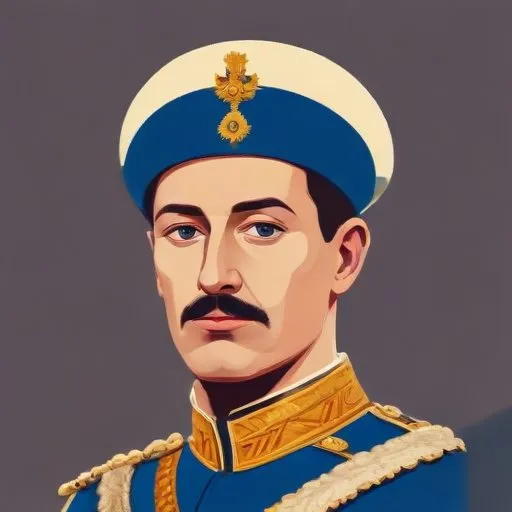
Alexander I of Serbia: The Troubled King of Serbia
A Life of Turmoil and Assassination
Alexander I of Serbia, also known as Aleksandar Obrenović, is best known for his tumultuous reign as the King of Serbia from 1889 to 1903, which was cut short by his brutal assassination, along with his wife, Draga Milić, by a group of Royal Serbian Army officers. His reign was marked by controversy, power struggles, and ultimately, tragedy.
Early Life and Accession
Born on August 14, 1876, Alexander was the son of King Milan and Queen Natalie of Serbia, belonging to the Obrenović dynasty. In 1889, King Milan unexpectedly abdicated, and Alexander, just 13 years old, was proclaimed king, with three regents appointed to govern in his place, including his mother, Queen Natalie.
Consolidating Power
In 1893, Alexander ordered the arrest of the regents, proclaiming himself of age and dissolving the national assembly. He then abolished his father's liberal constitution of 1889 and restored the previous one, marking the beginning of a tumultuous period of power struggles.
Family Dynamics and Influences
Alexander's relationship with his parents was complex. His father, King Milan, was regarded as the de facto ruler of the country, and Alexander often sought to assert his independence from his father's influence. In 1894, he brought his father back to Serbia and appointed him commander-in-chief of the army, leading to further tensions between them.
Marriage and Controversy
In the summer of 1900, Alexander announced his engagement to Draga Milić, a disreputable widow of an obscure engineer. The marriage was widely opposed by the political classes, and Draga was seen as unpopular and infertile. The marriage led to further isolation and resentment among the Serbian people.
Assassination and Legacy
On June 11, 1903, Alexander and his wife, Draga, were brutally assassinated by a group of Royal Serbian Army officers, led by Captain Dragutin Dimitrijević. The assassination marked the end of the Obrenović dynasty and paved the way for the Karađorđević dynasty to take power.
Historical Context and Impact
Alexander's reign and assassination must be viewed within the context of the tumultuous period of Serbian history. His reign marked a period of change and upheaval, and his assassination had far-reaching consequences for the country. Despite his troubled reign, Alexander's legacy is one of a young king who struggled to assert his power and independence in a complex and volatile political landscape.
Personal Milestones and Key Life Events
- Born on August 14, 1876
- Proclaimed king in 1889
- Arrested regents in 1893, proclaiming himself of age
- Married Draga Milić in 1900
- Assassinated on June 11, 1903
Quotes and Memorable Sayings
There are no recorded quotes or memorable sayings attributed to Alexander I of Serbia.
Influence on Modern Society
Alexander's reign and assassination had significant consequences for modern Serbian society. His reign marked a period of change and upheaval, and his assassination paved the way for the Karađorđević dynasty to take power, shaping the course of Serbian history.
Trivia and Fun Facts
Alexander's marriage to Draga Milić was widely opposed, and it is said that he was influenced by her allegedly numerous sexual liaisons. Despite his troubled reign, Alexander's legacy is one of a young king who struggled to assert his power and independence in a complex and volatile political landscape.
FAQ
What was Alexander I of Serbias role in Serbian history?
Alexander I of Serbia was a king of Serbia who played a significant role in the countrys struggle for independence from Ottoman rule. He ruled from 1889 to 1903 and implemented a series of reforms aimed at modernizing Serbia.
What were Alexander I of Serbias reforms?
Alexander I of Serbias reforms aimed to modernize Serbias economy, education, and military. He also established a new constitution and reformed the countrys judicial system.
How did Alexander I of Serbia come to power?
Alexander I of Serbia was born as Alexander Obrenović and was the son of King Milan Obrenović. He succeeded his father as king in 1889 and ruled until his assassination in 1903.
What was Alexander I of Serbias relationship with Austria-Hungary?
Alexander I of Serbia had a complicated relationship with Austria-Hungary, which controlled much of the Balkans at the time. He attempted to balance Serbias interests with those of Austria-Hungary, while also pursuing Serbian independence.
What is Alexander I of Serbias legacy in Serbian history?
Alexander I of Serbias legacy in Serbian history is that of a reform-minded leader who attempted to modernize Serbia and assert its independence from Ottoman rule. Despite his efforts, his reign was ultimately marked by instability and his assassination, paving the way for the rise of the Karađorđević dynasty.