


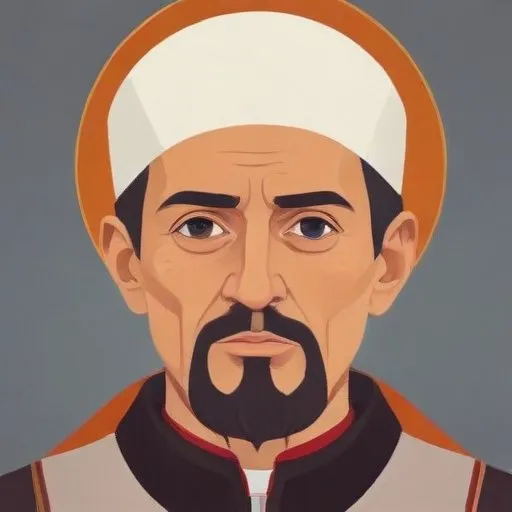
A Russian Orthodox priest and scholar who wrote extensively on Christianity, philosophy, and culture, making Orthodox theology accessible to a broad audience. His works bridge the gap between faith and secular culture.
Alexander Men, a Russian Orthodox priest, dissident, and theologian, left an indelible mark on the world of theology and beyond. Through his extensive writings, Men introduced thousands of Soviet citizens to Christianity, catalyzing a spiritual awakening in a nation under communist rule.
Born on January 22, 1935, in Moscow, Russia, Men's early life was marked by a strong connection to his Jewish heritage, thanks to his father, Volf GershLeibovich Vladimir Grigoryevich Men, who was a chief engineer of a textile factory. Despite his father's secular inclinations, Men's maternal ancestors, with roots in Poland, instilled in him a deep respect for faith and tradition.
Men's crowning achievement was his magnum opus, History of Religion: In Search of the Way, the Truth, and the Life, a seven-volume opus that began in 1970. The seventh volume, Son of Man, released in 1969, served as a gateway to Christianity for thousands of Soviet citizens. His writings on theology, the history of religion, and Christian doctrine resonated deeply with those seeking spiritual guidance in a time of repression.
Men's contributions extended beyond the written word. He founded an Orthodox open university in 1990, one of the first Sunday schools in the USSR, and a charity group at the Russian Children's Hospital, demonstrating his commitment to education, community, and social welfare.
Men's influence continues to grow, with his legacy felt among Christians in Russia and abroad. His courage in the face of persecution and his unwavering dedication to his faith have inspired countless individuals to reexamine their own spiritual beliefs.
Tragically, Men's life was cut short on September 9, 1990, when he was brutally murdered outside his home in Semkhoz, Moscow Oblast. The circumstances surrounding his murder remain unclear, but his legacy lives on as a testament to the power of faith and resilience.
Men's life was marked by several milestones, including the founding of his Sunday school and charity group. He once said, "The greatest sin is not to forgive, but to justify oneself before God and before others." This quote encapsulates his emphasis on compassion, forgiveness, and personal responsibility.
Men's work and influence can be compared to that of other prominent religious figures of his time, such as Pope John Paul II and Billy Graham. While each had their own unique approach and message, they shared a common goal of spreading faith and promoting spiritual growth during a tumultuous period in world history.
Through his life and work, Alexander Men demonstrated the transformative power of faith, education, and community. His legacy serves as a beacon of hope, inspiring future generations to pursue a path of spiritual growth, compassion, and service to others.
Born in 1874
A Russian-French philosopher and theologian who explored the intersection of Christianity and existentialism, known for his critiques of communism and advocacy for human freedom and dignity.
