


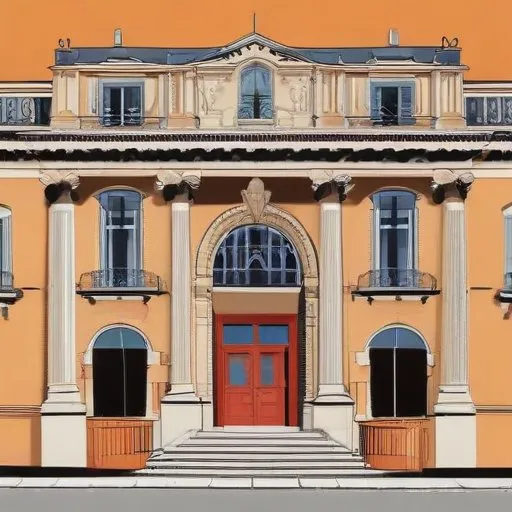
Designed the iconic Paris Bourse, a stunning example of neoclassical architecture, and played a significant role in shaping the city's urban landscape. Known for his innovative and elegant designs that blended functionality with aesthetics.
Alexandre-Théodore Brongniart is renowned for his exquisite architectural designs that have left an indelible mark on the City of Light, Paris. His creations, steeped in neoclassical elegance, have stood the test of time, earning him a revered place in the annals of French architectural history.
Born on February 15, 1739, in Paris, France, Brongniart was destined for greatness. His penchant for architecture was evident from a young age, and he went on to become a prominent member of Parisian society. In 1767, he married Anne-Louise d'Egremont, and the couple's social circle included esteemed artists like Marie Louise Élisabeth Vigée Lebrun, who painted the portrait of their daughter, Alexandrine-Émilie Brongniart, now housed in the National Gallery in London.
Brongniart's portfolio boasts an impressive list of architectural marvels, including the Hôtel de Bourbon-Condé, the Hôtel de Monaco, and several exclusive private residences. His mastery of neoclassical design earned him recognition from the Académie Royale d'Architecture in 1781, and he was subsequently appointed architect and controller-general of the École Militaire in 1782. The same year, he refurbished the Hôtel de Besenval, solidifying his reputation as a leading architect of his time.
In 1804, Napoleon Bonaparte commissioned Brongniart to design the iconic Père Lachaise Cemetery, a testament to the architect's ability to create spaces that exude both grandeur and serenity. The Emperor was so enamored with Brongniart's work that, in 1807, he entrusted him with designing the Paris Bourse, the Parisian stock exchange. Although Brongniart did not live to see the project's completion in 1825, the building, now known as the Palais Brongniart, remains an iconic landmark in Paris, a testament to his enduring legacy.
Brongniart's personal life was marked by strong relationships with artists and intellectuals of his time. His friendship with Jean Antoine Houdon, the preeminent French sculptor, led to the creation of stunning busts of his children, now housed in the Louvre Museum. Brongniart's son, Alexandre, went on to become a respected geologist and director of the renowned Sèvres porcelain factory, ensuring the continuation of the family's legacy in the world of art and design.
Alexandre-Théodore Brongniart's architectural masterpieces continue to inspire generations of architects, designers, and art enthusiasts. His commitment to elegance, proportion, and beauty has left an indelible mark on the City of Light, earning him a permanent place in the pantheon of French architectural greats.
As we stroll through the streets of Paris, we are reminded of Brongniart's enduring legacy – a testament to the power of art and design to transcend time and captivate the human spirit.
Born in 1769
A French military leader who rose to prominence during the French Revolution and became Emperor of France, known for his military conquests and reorganization of Europe. He is also famous for his Napoleonic Code, which remains a foundation of modern law.
