


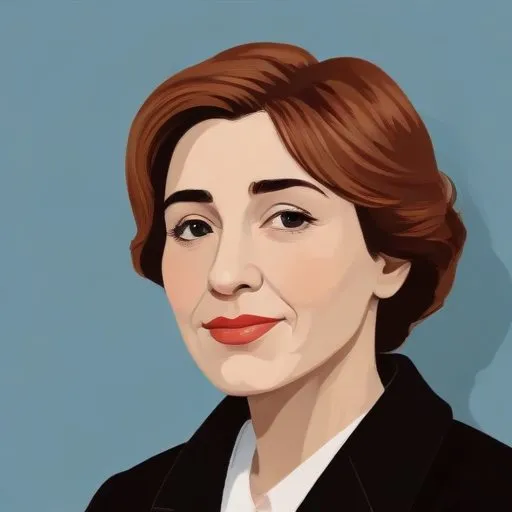
A pioneering female poet and writer who broke conventions with her bold, sensual, and feminist works, earning her a prominent place in Argentine literary history.
Alfonsina Storni, a Swiss-Argentine poet and playwright, is renowned for her poignant and emotive works that capture the essence of modernist literature. Her poetry and plays are celebrated for their profound insights into the human condition, love, and feminism, making her a leading figure in 20th-century Argentine literature.
Born on May 29, 1892, in Sala Capriasca, Switzerland, to Italian-Swiss parents, Alfonsina's early life was marked by a blend of European and Argentine influences. Her family's economic struggles led them to move to San Juan, Argentina, and later to Rosario, where she grew up amidst the vibrant cultural scene.
Storni's love affair with literature began at the tender age of 12, when she penned her first verse. As she navigated her teenage years, she continued to write, eventually joining a traveling theater company in 1907, which further propelled her passion for the arts.
In 1912, Storni moved to Buenos Aires, seeking anonymity and a fresh start. It was here that she published her first short story in the magazine Fray Mocho, marking the beginning of her literary career.
Her early work was characterized by its lyricism, sensuality, and exploration of themes such as love, death, and feminism. Storni's poetry and plays resonated with the Argentine public, earning her recognition and acclaim in the literary circles.
Some of Storni's most notable works include Ocre (1925), Dulce Dale (1927), and Mundo de siete pozos (1934). Her poetry is distinguished by its use of free verse, exploring the inner lives of women, and challenging traditional societal norms.
Storni's philosophical contributions lie in her portrayal of women as autonomous beings, capable of experiencing desire, pain, and joy. Her work critiques the patriarchal structures of Argentine society, advocating for women's rights and empowerment.
Alfonsina Storni's legacy extends beyond the literary sphere. Her pioneering work has inspired generations of Argentine writers, including famous authors like Jorge Luis Borges and Pablo Neruda.
Her poetry has been translated into numerous languages, ensuring her influence reaches beyond Argentine borders. Storni's advocacy for women's rights and her challenge to traditional gender roles have contributed significantly to the feminist movement in Argentina.
Storni's personal life was marked by tumultuous relationships and struggles with depression. In 1938, at the age of 46, she took her own life by drowning in the Mar del Plata sea.
Despite the tragic circumstances of her death, Storni's life and work continue to inspire and empower generations of readers, writers, and artists. Her legacy serves as a testament to the power of literature to transform and challenge societal norms.
"I am not a poet, I am a woman who writes."
"The only thing that matters is to be true to oneself, and to do what one feels is right, without worrying about what others may think."
Alfonsina Storni was posthumously awarded the prestigious Premio Nacional de Poesía (National Poetry Prize) in 1940.
Storni's life and work serve as a testament to the power of perseverance, creativity, and passion. Her unwavering commitment to her craft, despite the challenges she faced, continues to inspire writers and artists around the world.
As we reflect on Alfonsina Storni's remarkable life and legacy, we are reminded of the transformative power of literature to challenge, inspire, and empower generations to come.
Born in 1899
A visionary writer who crafted intricate, philosophical tales that blurred reality and fantasy, influencing generations of authors and thinkers. 82
Born in 1890
Argentine writer and intellectual who championed women's rights and cultural exchange between Europe and Latin America through her writing and salons. She was a pioneering figure in Argentine literature and a fierce advocate for social justice.
Born in 1914
A pioneering figure in magical realism, blending fantastical elements with everyday life in his novels and short stories, exploring the human condition and social commentary.
Born in 1904
A Chilean poet and diplomat who wrote passionate and evocative poetry that explored love, politics, and the human condition, and was awarded the Nobel Prize in Literature in 1971.
Born in 1898
A Spanish poet, playwright, and director who explored themes of love, death, and Spanish culture through his works, including the famous play "Blood Wedding".
Born in 1889
A Chilean poet and educator who was the first Latin American to win the Nobel Prize in Literature, known for her passionate and introspective poetry that explores themes of love, nature, and social justice.
Born in 1900
A pioneering figure in Argentine literature, known for his innovative and influential works that explored the lives of the working class and the darker aspects of urban society.
Born in 1914
A pioneering Argentine writer of fantasy and science fiction, known for his innovative and influential works that blend genres and explore philosophical themes.
