


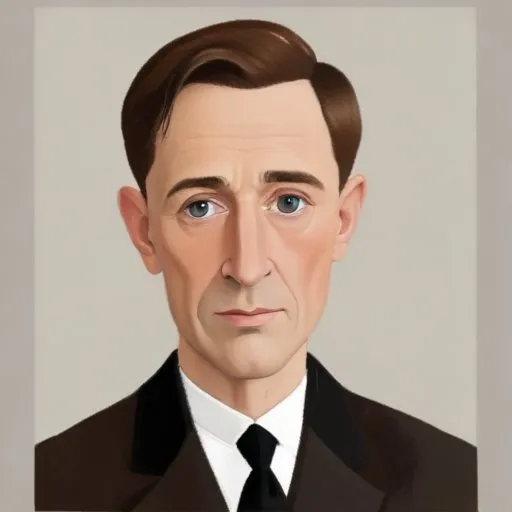
A pioneering New Zealand artist and educator, known for his impressionist landscapes and advocacy for art education in schools.
Alfred Henry OKeeffe was a renowned New Zealand artist and art teacher who dedicated his life to sharing his passion for art with others, while also creating a legacy of captivating works that continue to inspire generations. He is perhaps best known for being one of the few New Zealand artists to engage with new ideas and stay in New Zealand during the early 20th century, a time when many adventurous artists, like Frances Hodgkins, sought inspiration overseas.
Born on July 21, 1858, in Sandhurst, Victoria, Australia, OKeeffe and his family moved to Dunedin, New Zealand around 1865. He studied at the Dunedin School of Art from 1881 to 1886 and later at the prestigious Académie Julian in Paris from 1894 to 1895.
OKeeffe's artistic career spanned several decades, during which he exhibited his works with various art societies, including the Otago Art Society, Canterbury Society of Arts, New Zealand Academy of Fine Arts, Auckland Society of Arts, South Canterbury Arts Society, and Wanganui Society of Arts and Crafts.
His most famous work, "The Defence Minister's Telegram" (1921), is a poignant tribute to his two sons, Lawrence and Victor, who lost their lives in Gallipoli in 1915. This powerful piece is now part of the Dunedin Public Art Gallery's permanent collection.
OKeeffe's passion for art extended beyond his own creations. He taught art at the Dunedin School of Art from 1912 to 1920 and later at the Barn Studio with Mabel Hill in the early 1920s. His dedication to sharing his knowledge and skills with others has left a lasting impact on New Zealand's art scene.
OKeeffe was a devoted husband and father of six children, four of whom predeceased him. Despite the challenges he faced in his personal life, he continued to pursue his passion for art, leaving behind a legacy that honors his family's memory.
Alfred Henry OKeeffe's contributions to New Zealand's art scene are immeasurable. His commitment to staying in New Zealand and engaging with new ideas has inspired generations of artists. His published recollections, which provide a firsthand account of the artistic milieu of his time, are a testament to his dedication to preserving New Zealand's artistic heritage.
Today, OKeeffe's works continue to be celebrated and admired for their beauty, emotion, and historical significance. His story serves as a reminder of the power of art to bring people together, comfort, and inspire, even in the face of adversity.
