


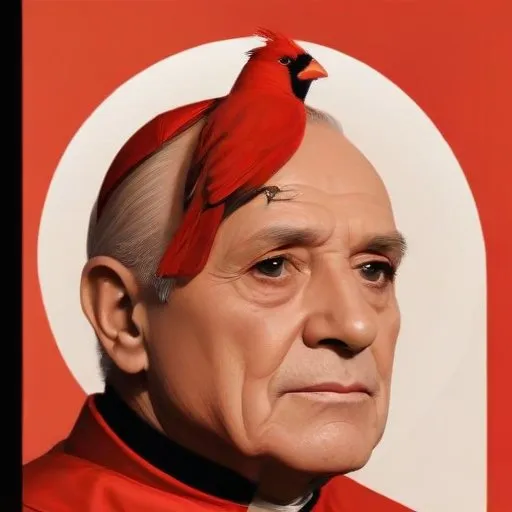
A prominent Catholic Church leader who served as the Archbishop of Milan and was a key figure in the Vatican's diplomatic efforts during World War II. He's known for his humanitarian work and efforts to protect Jews and other persecuted individuals during the war.
Alfredo Ludovico Schuster was born on January 18, 1880, in Rome, to Johann Schuster, a Bavarian tailor, and Maria Anna Tutzer, hailing from Bolzano. His father, three decades older than his mother, was a double widower. Schuster was baptized on January 20, 1880, as Alfredo Ludovico Luigi, and received his Confirmation on April 2, 1887. He made his First Communion on Pentecost 1890 in the church of Sant'Anna in Porta Angelica.
Schuster's early life was marked by tragedy, including a brief kidnapping episode, and the loss of his father in 1889. He served as an altar server at the Santa Maria della Pietà in Camposanto dei Teutonici church, next to St. Peter's Basilica. He completed his high school studies at the Basilica of Saint Paul Outside the Walls in November 1891.
On November 13, 1898, Schuster joined the Order of Saint Benedict at their novitiate at Saint Paul Outside the Walls, adopting the name Ildefonso. This marked the beginning of his lifelong commitment to the Benedictine order, which would shape his spiritual and philosophical outlook.
Schuster's ascension to the cardinalate was a gradual one, marked by various appointments and recognitions. He served as an abbot prior to his elevation to the rank of archbishop. In 1929, he was appointed as the Archbishop of Milan, a position that would test his mettle in the face of adversity.
During World War II, Schuster's views on fascism underwent a significant transformation. Initially, he was a tacit supporter of Mussolini's regime, but the annexation of Austria and the introduction of Italian racial laws prompted him to reevaluate his stance. He began to vocalize his criticisms of the regime's anti-Christian aspects, a decision that would have far-reaching consequences.
Schuster's tumultuous life was marked by contrasts and controversies. Despite his initial support for fascism, he eventually became a vocal critic of the regime. His beatification, celebrated in mid-1996 in St. Peter's Square, serves as a testament to his unwavering commitment to his faith and his eventual opposition to the forces of oppression.
Schuster's philosophical contributions were shaped by his Benedictine roots and his experiences during World War II. He believed in the importance of moral vigilance and the need for Christians to stand against oppression. His later years were marked by a deepening spirituality, which guided his actions and decisions.
Schuster's life serves as a powerful reminder of the complexities of human nature and the importance of moral courage. His transformation from a supporter of fascism to a vocal critic of the regime offers a powerful lesson in the need for individuals to stand against oppression and discrimination.
Born in 1920
Leader of the Catholic Church from 1978 to 2005, known for helping to end communism in Poland and being a charismatic advocate for human rights and social justice.
99 Years Old
The first pope to resign in nearly 600 years, he's known for his conservative views and efforts to strengthen the Catholic Church's traditional teachings. He's also a prolific writer and theologian.
89 Years Old
The leader of the Catholic Church, known for his progressive stance on social issues and efforts to reform the Church, inspiring millions worldwide.
