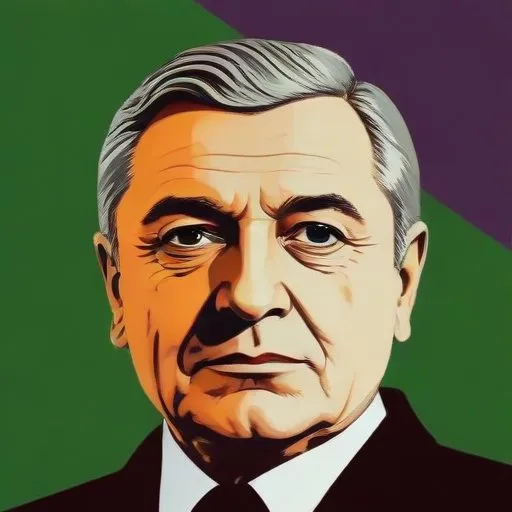
Algirdas Brazauskas: A Life of Leadership and Reform
A Trailblazer in Lithuanian Politics
Algirdas Brazauskas, the fourth President of Lithuania, was a pioneering figure in the country's transition from Soviet rule to democracy. As the first democratically elected president of post-Soviet Lithuania, he played a pivotal role in shaping the nation's future.
Early Life and Education
Born on September 22, 1932, in Rokiskis, Lithuania, Brazauskas came from a family with a rich history, tracing his roots back to the 18th century. He graduated from Kaunas Polytechnic Institute in 1956 with a degree in civil engineering and later earned a Ph.D. in economics in 1974.
Building a Career in Government
Brazauskas' career in government began in 1965, where he held various positions in the government of Lithuanian SSR and the Communist Party of Lithuania. He served as the minister of construction materials industry of Lithuanian SSR, deputy chairman of State Planning Committee of Lithuanian SSR, and secretary of Central Committee of Communist Party of Lithuania.
A Transformation to Moderate Reformer
In the 1980s, Brazauskas underwent a significant transformation, shifting from a Communist Party apparatchik to a moderate reformer. This change in ideology was pivotal in his later years, as he navigated the complexities of Lithuanian politics.
Presidency and Prime Ministership
Brazauskas' most notable achievements came during his presidency from 1993 to 1998 and prime ministership from 2001 to 2006. As president, he oversaw Lithuania's transition to a market-based economy and implemented reforms that promoted democracy and economic growth. As prime minister, he focused on strengthening Lithuania's economic ties with the European Union and integrating the country into the global community.
Personal Life and Legacy
Brazauskas was married twice, first to Julia, with whom he had two daughters, and later to Kristina Butrimien in 2002. He passed away on June 26, 2010, leaving behind a legacy of leadership, reform, and dedication to his country.
Impact on Lithuanian Politics
Brazauskas' influence on Lithuanian politics is profound. He played a crucial role in shaping the country's transition to democracy and was instrumental in breaking away from Soviet rule. His commitment to economic reform and integration with the European Union has had a lasting impact on Lithuania's economy and place in the global community.
Quotes and Memorable Sayings
- "We must create a society where everyone has equal opportunities and can contribute to the country's development."
- "Lithuania's future lies in its ability to adapt to the changing world and take advantage of new opportunities."
Historical Context and Legacy
Brazauskas' life and career spanned a tumultuous period in Lithuanian history, from Soviet occupation to independence and democracy. His leadership and vision have left a lasting impact on the country, solidifying his place as one of the most important figures in Lithuanian politics.
FAQ
What was Algirdas Brazauskass role in Lithuanian politics?
Algirdas Brazauskas served as the 2nd President of Lithuania from 1993 to 1998, playing a crucial role in the countrys transition to independence and democracy.
What were Algirdas Brazauskass contributions to Soviet politics?
Before becoming President of Lithuania, Algirdas Brazauskas held various positions in the Soviet government, including the First Secretary of the Lithuanian Communist Party.
What was Algirdas Brazauskass stance on Lithuanian independence?
Algirdas Brazauskas was a strong advocate for Lithuanian independence from the Soviet Union, working closely with other Baltic states to achieve this goal.
Did Algirdas Brazauskas receive any international awards?
Yes, Algirdas Brazauskas received several international awards, including the Order of the White Eagle from Poland and the Order of the Three Stars from Latvia.
What was Algirdas Brazauskass legacy in modern Lithuania?
Algirdas Brazauskas is remembered as a key figure in Lithuanias transition to independence and is celebrated for his role in shaping the countrys modern identity.