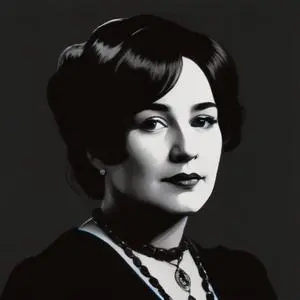
Alice Guy-Blaché: Pioneering Filmmaker and Trailblazing Woman
Alice Guy-Blaché was a true visionary, known as one of the first filmmakers to make a narrative fiction film, as well as the first woman to direct a film. From 1896 to 1906, she was the only female filmmaker in the world, experimenting with innovative techniques, such as Gaumont's Chronophone sync-sound system, color tinting, interracial casting, and special effects.
Early Life and Education
Born on July 1, 1873, in Paris, France, Alice Guy-Blaché was the daughter of Émile Guy, a bookstore owner, and Marie Clotilde Franceline Aubert. Her early life was marked by frequent movements between Chile, where her parents had settled, and France. After her family returned to Paris, Alice was left in the care of her grandmother in Carouge, Switzerland, at a young age. She later attended the Faithful Companions of Jesus school in Veyriers-sous-Salve, France.
Rise to Fame
Guy-Blaché's entry into the film industry began in 1894, when she joined the Gaumont film company as a secretary. Her talent and passion for storytelling soon led her to become a filmmaker, and in 1896, she made her first film,
La Fée aux Choux, considered to be one of the earliest narrative films. Throughout the late 1890s and early 1900s, Guy-Blaché continued to experiment with new techniques and themes, earning her a reputation as a pioneering filmmaker.
Solax Studios and Interracial Casting
In 1910, Guy-Blaché co-founded Solax Studios in Flushing, New York, becoming the first woman to own and operate a film studio. Her studio invested $100,000 in a new facility in Fort Lee, New Jersey, a hub for American filmmaking at the time. In 1912, she directed
A Fool and His Money, a film featuring an all-African American cast, a groundbreaking achievement in its time. This film is now preserved at the National Center for Film and Video Preservation at the American Film Institute, recognizing its historical and aesthetic significance.
Legacy and Impact
Guy-Blaché's contributions to the film industry are immense. She directed over 1,000 films, including dramas, comedies, and documentaries, showcasing her versatility and innovative spirit. Her legacy extends beyond her own work, as she paved the way for future generations of female filmmakers. Her story serves as an inspiration, highlighting the importance of perseverance, creativity, and determination in the face of adversity.
Awards and Honors
Guy-Blaché's achievements have been recognized with numerous awards and honors, including:
- In 1955, she was awarded the Legion of Honor by the French government.
- In 2011, the American Film Institute preserved her film A Fool and His Money at the National Center for Film and Video Preservation.
- In 2013, the Museum of Modern Art in New York City held a retrospective of her work, celebrating her contributions to the film industry.
Personal Life and Later Years
In 1907, Guy-Blaché married Herbert Blaché, a British filmmaker, and the couple had one daughter, Simone. After her husband's death in 1953, Guy-Blaché devoted her life to preserving her films and promoting her legacy. She wrote her autobiography,
The Memoirs of Alice Guy-Blaché, which provides valuable insights into her life and career. Guy-Blaché passed away on March 24, 1968, at the age of 94, leaving behind a legacy that continues to inspire and empower women in the film industry.