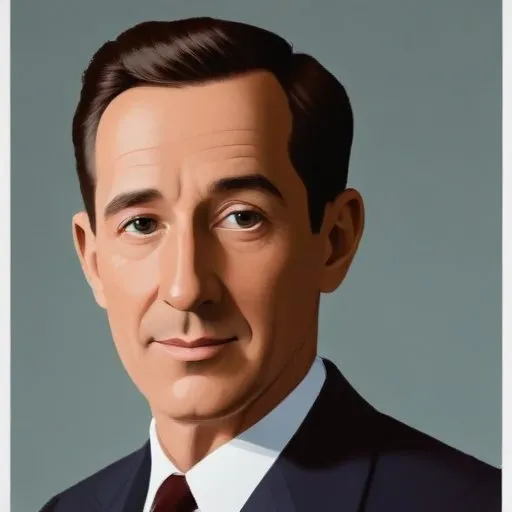
Allen B. DuMont: The Pioneer of Television
The Man Behind the Screen
Allen B. DuMont is renowned for revolutionizing the world of television by improving the cathode ray tube in 1931, paving the way for the first commercially practical television set. His innovative spirit and relentless pursuit of excellence led to the creation of the DuMont Television Network, the first licensed television network in 1946.
A Childhood of Curiosity
Born on January 29, 1901, in Brooklyn, New York City, DuMont's early life was marked by a bout of polio at the age of 10, which left him bedridden for nearly a year. During this time, his father brought him books and magazines, fueling his curiosity in science and wireless radio communication. DuMont taught himself Morse code and developed a fascination with crystal radio receivers, which he would assemble, disassemble, and rebuild multiple times.
The Road to Innovation
DuMont's fascination with radio communication continued to grow, and he began building transmitters and receivers. His father's permission to erect a 30-foot-high transceiving antenna on their rooftop in Montclair, New Jersey, further enabled his experiments. This early exposure to science and technology laid the foundation for his future inventions and innovations.
Breakthroughs and Achievements
- In 1931, DuMont improved the cathode ray tube, making it suitable for use in television receivers.
- In 1938, he manufactured and sold the first commercially practical television set to the public, with his Model 180 television receiver being the first all-electronic television set sold.
- In 1946, DuMont founded the DuMont Television Network, linking station WABD in New York City to W3XWT in Washington, D.C.
A Legacy of Firsts
DuMont's contributions to television picture tubes, TV sets, and components, as well as his involvement in commercial TV broadcasting, made him the first millionaire in the business. He was a true pioneer in the field of television, and his innovations paved the way for the development of modern television technology.
Personal Life and Quotes
DuMont's personal life was marked by a strong friendship with Dr. Thomas T. Goldsmith, his Vice President of Research. In an interview, DuMont once said, "I've always believed that the most important thing in life is to have a sense of purpose and to pursue it with all your heart."
Lasting Impact
Allen B. DuMont's legacy extends far beyond his technical achievements. He played a crucial role in shaping the television industry, and his contributions continue to influence modern broadcasting. As a testament to his enduring impact, DuMont's story serves as an inspiration to innovators and entrepreneurs alike, reminding us of the power of curiosity, perseverance, and determination.
FAQ
Who founded the DuMont Television Network?
Allen B. DuMont, an American engineer and broadcaster, founded the DuMont Television Network in 1944. He was a pioneer in the television industry and played a significant role in shaping its early development.
What were Allen B. DuMonts contributions to the television industry?
Allen B. DuMont made significant contributions to the television industry, including developing the first practical electronic television system and founding the DuMont Television Network, which was the fourth major television network in the United States.
What was Allen B. DuMonts role in the development of modern television?
Allen B. DuMont played a crucial role in the development of modern television, pioneering the use of electronic television systems and advocating for the adoption of color television.
What was Allen B. DuMonts legacy in the broadcasting industry?
Allen B. DuMonts legacy in the broadcasting industry is marked by his innovative spirit, entrepreneurial drive, and commitment to advancing the technology and art of television broadcasting.
What are some interesting facts about Allen B. DuMonts life and career?
Some interesting facts about Allen B. DuMonts life and career include his early experiments with television in the 1920s, his development of the first practical electronic television system, and his advocacy for the adoption of color television.