


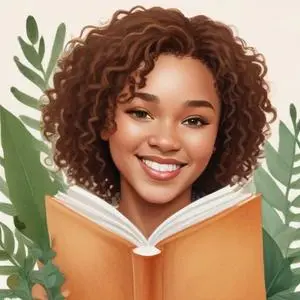
Young, inspiring voice of social justice and change, using poetry to raise awareness about issues like racism, inequality, and hope.
Amanda Gorman is a powerful force in modern poetry, using her words to tackle issues of oppression, feminism, race, and marginalization. As the first person to be named National Youth Poet Laureate, she has risen to international acclaim with her thought-provoking poetry and captivating performances.
Born on March 7, 1998, in Los Angeles, California, Gorman was raised by her single mother, Joan Wicks, a 6th-grade English teacher, alongside her twin sister, Gabrielle, an activist and filmmaker. Growing up in an environment with limited television access, Gorman developed a passion for reading and writing, encouraged by her mother.
Gorman's childhood was not without its challenges. She was diagnosed with an auditory processing disorder, making her hypersensitive to sound, and she also had a speech impediment. However, she did not let these obstacles hold her back. Instead, she viewed them as a strength, and credits her speech therapy with developing her exceptional reading and writing skills.
Gorman's poetry career began to take off in 2015 with the publication of her debut book, The One for Whom Food Is Not Enough. However, it was her powerful poem, "The Hill We Climb," delivered at the inauguration of Joe Biden in 2021, that catapulted her to international fame. The poem's message of hope, unity, and resilience resonated with people around the world, and it quickly became a cultural phenomenon.
Fresh from her inauguration performance, Gorman became the first poet to perform at the Super Bowl, delivering her poem "Chorus of the Captains" at Super Bowl LV. This milestone cemented her status as a trailblazer in the world of poetry.
Gorman's achievements have been recognized with numerous awards and honors. She was highlighted in Time magazine's 100 Next list under the category of Phenoms, with a profile written by Lin-Manuel Miranda. Her poetry books have achieved bestseller status, and she has obtained a professional management contract.
Gorman's poetry is deeply rooted in her commitment to social justice, feminism, and the African diaspora. Her work challenges readers to confront the harsh realities of oppression, while also offering a message of hope and resilience. Through her poetry, Gorman seeks to inspire others to use their voices to create positive change in the world.
Gorman's personal journey is a testament to her strength and determination. From overcoming her speech impediment to becoming a celebrated poet, she has shown that with hard work and perseverance, anything is possible.
Through her poetry, Gorman continues to inspire a new generation of young people to find their voice and use it to make a difference. As a role model for young women, particularly those from marginalized communities, Gorman's impact will be felt for years to come.
Gorman's poetry has had a profound impact on modern society, offering a beacon of hope and unity in a time of great division. Her words have inspired countless people to take action, to use their voices to create positive change, and to celebrate the diversity of human experience.
As a trailblazer in the world of poetry, Gorman's influence extends beyond the literary world. She has inspired a new wave of young poets, writers, and activists to use their voices to challenge the status quo and create a better future for all.
"Being heard is a kind of restoration, a kind of redemption, a kind of freedom."
"Poetry is not just a reflection of our society, it's a challenge to our society."
Gorman's words are a powerful reminder of the impact that poetry can have on our lives and our society. Her poetry continues to inspire, uplift, and challenge us to be better versions of ourselves.
Amanda Gorman's rise to fame is a testament to the power of poetry to shape our understanding of the world and our place in it. As a young, black woman, Gorman's voice is a vital contribution to the literary canon, offering a fresh perspective on the issues that matter most.
As a poet, activist, and role model, Gorman's legacy will be felt for generations to come. Her poetry will continue to inspire, challenge, and uplift, offering a beacon of hope in a world that often seems divided and uncertain.
In the end, Gorman's story is one of triumph over adversity, a testament to the power of the human spirit to overcome even the greatest challenges. As we look to the future, we would do well to remember her words: "The hill we climb is the hill we must climb, and the hill we climb is the hill that will make us free."
62 Years Old
The 44th First Lady of the United States, a highly educated and outspoken advocate for women's rights, healthy eating, and education, who used her platform to inspire and empower millions.
65 Years Old
The first African American to hold the office, he served two terms as President of the United States, earning a Nobel Peace Prize for his efforts to strengthen international diplomacy and cooperation. He's known for his charismatic leadership and commitment to progressive values.
98 Years Old
A renowned author and poet who penned autobiographical works that explored themes of racism, identity, and personal struggle, inspiring generations with her powerful storytelling.
95 Years Old
A celebrated author and editor, renowned for crafting powerful, poignant novels that explore the African American experience, particularly the lives of black women, and the horrors of slavery and racism.
82 Years Old
A celebrated author of powerful, poignant stories and poems that explore the experiences of African American women, delving into themes of identity, oppression, and social justice. Her works are known for their emotional depth and lyrical prose.
Born in 1902
A renowned poet, novelist, and playwright who powerfully voiced the experiences and struggles of African Americans during the Harlem Renaissance, using jazz and blues rhythms to convey the spirit of his people.
Born in 1891
A celebrated author and anthropologist who explored African-American culture through novels, stories, and folklore, particularly in the rural South during the early 20th century.
