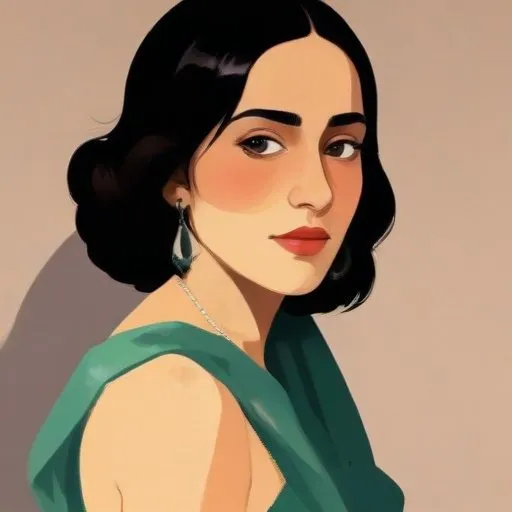
Amrita SherGil: The Visionary Indian Painter
A Pioneer in Modern Indian Art
Amrita SherGil is renowned for being one of the greatest avant-garde women artists of the early 20th century, leaving an indelible mark on modern Indian art. Her trailblazing work has earned her a reputation as a pioneer, with her legacy standing shoulder to shoulder with that of the pioneers from the Bengal Renaissance.
Early Life and Education
Born on January 30, 1913, in Budapest, Hungary, to Umrao Singh SherGil Majithia, a Indian Jat Sikh aristocrat, and
Marie Antoinette Gottesmann, a Hungarian-Jewish opera singer, Amrita's artistic talents were nurtured from a young age. She began formal painting lessons at the age of eight, and her uncle, Indologist Ervin Baktay, played a significant role in guiding her artistic development. Baktay's critiques and academic foundation helped shape Amrita's artistic vision.
The Artistic Journey
At the tender age of 19, Amrita gained recognition for her 1932 oil painting, Young Girls, which propelled her into the spotlight. Her artistic style was deeply rooted in pre-colonial Indian art, combined with contemporary cultural influences. Her travels to various countries, including Turkey, France, and India, further enriched her artistic expression.
Philosophical Contributions and Beliefs
Amrita's artistic philosophy was deeply influenced by her cultural heritage and her experiences as a woman. Her work often depicted everyday life, focusing on the struggles and triumphs of the common people. Her paintings also reflected her fascination with Indian mythology and her deep respect for the country's rich cultural traditions.
Career Highlights and Major Works
- Young Girls (1932): A seminal work that earned Amrita international recognition.
- Three Girls (1935): A painting that exemplifies her unique blend of traditional Indian art and modernist techniques.
- Brahmacharis (1934): A poignant depiction of young Brahmin priests, showcasing her mastery of color and composition.
Influence on Modern Society
Amrita's pioneering work has inspired generations of artists, breaking down barriers for women in the arts. Her legacy extends beyond the art world, as her paintings continue to influence Indian popular culture, from literature to music.
Personal Milestones and Key Life Events
- 1926: Amrita's uncle, Ervin Baktay, recognizes her artistic talent.
- 1932: Young Girls earns her international recognition.
- 1938: Amrita marries her first cousin, Victor Egan.
Legacy and Impact on Indian Art
Amrita SherGil's contributions to modern Indian art are immeasurable. Her work has redefined the boundaries of Indian art, paving the way for future generations of artists. Today, her paintings are among the most valuable and sought-after works by Indian women artists.
Trivia and Fun Facts
- Amrita was an avid reader and a talented pianist.
- She was the niece of Indologist Ervin Baktay.
- Amrita's paintings are part of the permanent collection at the National Gallery of Modern Art, New Delhi.
Awards and Honors
- 1934: Elected as an Associate of the Grand Salon in Paris.
Comparative Analysis with Contemporaries
Amrita SherGil's work is often compared to that of her contemporaries, such as
Rabindranath Tagore and
Jamini Roy. While sharing similarities with these artists, Amrita's unique style and vision set her apart as a pioneering force in modern Indian art.
Impact on Pop Culture
Amrita's work has inspired numerous adaptations and references in Indian popular culture, from literature to music. Her paintings continue to influence contemporary artists, ensuring her legacy endures.
Historical Context and Legacy
Amrita SherGil's life and work serve as a testament to her artistic vision and cultural heritage. Her pioneering work has left an indelible mark on modern Indian art, cementing her place as one of the greatest avant-garde women artists of the early 20th century.
FAQ
What was Amrita Sher-Gils artistic style?
Amrita Sher-Gils artistic style was a unique blend of Indian and European influences, characterized by bold colors, expressive brushstrokes, and a deep sense of emotion. Her work often explored themes of identity, culture, and femininity.
What inspired Amrita Sher-Gils artwork?
Amrita Sher-Gils artwork was inspired by her experiences as a Hungarian-Indian woman, as well as her interest in Indian mythology and culture. She was also influenced by European modernist movements, such as Fauvism and Expressionism.
What was Amrita Sher-Gils contribution to Indian modern art?
Amrita Sher-Gil was a pioneer of Indian modern art, introducing a new level of sophistication and experimentation to the countrys art scene. Her work paved the way for future generations of Indian artists.
What was Amrita Sher-Gils personal life like?
Amrita Sher-Gils personal life was marked by a sense of cultural displacement and rebellion. She was known for her fierce independence, her love of literature and music, and her tumultuous relationships.
How did Amrita Sher-Gils artwork reflect her cultural heritage?
Amrita Sher-Gils artwork reflected her cultural heritage through its blend of Indian and European influences. Her use of bright colors, intricate patterns, and mythological themes celebrated her Indian roots, while her bold brushstrokes and expressive style reflected her European upbringing.