


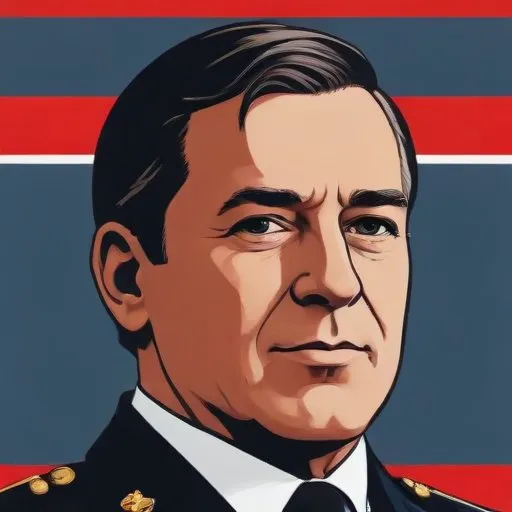
The 44th Governor of Ohio, a prominent military leader, and politician who played a significant role in the American Civil War and later governed the state of Ohio. He's most known for his military prowess and governance during a tumultuous period in American history.
Andrew L. Harris, also known as "The Farmer-Statesman," is renowned for his bravery during the American Civil War, particularly at the Battle of Gettysburg, and his subsequent service as the 44th Governor of Ohio. Harris's unwavering dedication to his country and state has cemented his place in American history as a true hero and statesman.
Harris was born on November 17, 1835, in Milford Township, Butler County, Ohio. He received his education in the local schools and later graduated from Miami University in 1860. His academic achievements laid the foundation for his future success in politics and war.
Harris's military career began in 1860 when he enlisted as a private in the Union Army. He quickly rose through the ranks, becoming a colonel of the 75th Ohio Infantry. During the Battle of Gettysburg, Harris led his men in a daring withdrawal through the streets, securing Cemetery Hill, a crucial Union stronghold. His bravery and tactical prowess earned him recognition, and he went on to play a key role in delaying Confederate attacks the following day.
Harris continued to serve with distinction throughout the war, receiving a brevet promotion to brigadier general of volunteers. After the war, he returned to Ohio, where he practiced law and began his foray into politics.
Harris's political career spanned multiple decades and offices. He served in the Ohio State Senate from 1866 to 1870 and as Preble County Probate Judge from 1875 to 1882. In 1891 and 1893, he was elected as the lieutenant governor of Ohio, serving under William McKinley. Harris's reputation as a steadfast Republican and temperance advocate led to his appointment as governor in 1906, following the death of John M. Pattison.
During his tenure as governor, Harris signed landmark legislation banning corporate political donations. Although he lost the 1908 gubernatorial election to Judson Harmon, Harris's commitment to public service remained unwavering.
Harris married Caroline Conger in 1865, and they had one son together. Throughout his life, Harris remained dedicated to his family and community, earning the respect and admiration of his contemporaries.
Andrew L. Harris's remarkable life serves as a testament to his unwavering devotion to his country, state, and fellow citizens. His bravery during the Civil War, combined with his distinguished political career, has secured his place as one of Ohio's most cherished historical figures.
"The true glory of a nation is not in its wealth or its armies, but in the character of its people." - Andrew L. Harris
Harris's words continue to inspire generations, reminding us that the true measure of a nation lies in the bravery, compassion, and dedication of its citizens.
Born in 1822
The 19th President of the United States, a general, lawyer, and politician who ended the Reconstruction era and withdrew federal troops from the South, allowing Racial Segregation to begin. He's also known for being a strong supporter of education and civil service reform.
Born in 1831
The 20th President of the United States was a multifaceted leader who served as a general in the Civil War and later became a lawyer and politician, known for his strong advocacy for education and civil rights. He's also infamous for being assassinated just six months into his presidency.
Born in 1726
A Virginia politician, planter, and merchant who served in the Continental Congress and played a key role in the American Revolution. He was a signer of the Declaration of Independence.
Born in 1843
The 25th President of the United States, a strong leader who championed high tariffs and annexed Hawaii, is most known for being assassinated at the 1901 World's Fair. He played a significant role in shaping the country's economy and foreign policy.
Born in 1858
A pioneering leader who championed progressive reforms, trust-busting, and conservation, earning a Nobel Peace Prize for mediating the Russo-Japanese War. He's also famous for his rugged outdoorsmanship and "big stick" diplomacy.
Born in 1865
The 29th President of the United States, a journalist-turned-politician, led the country through a period of post-war prosperity and scandalous corruption. He's infamous for his administration's numerous scandals and his own extramarital affairs.
Born in 1872
The 30th President of the United States, a lawyer and politician, led the country through a period of economic prosperity and limited government intervention, earning the nickname "Silent Cal" for his frugal and humble nature. He's most known for his minimalist approach to governance and tax cuts.
Born in 1874
The 31st President of the United States was a humanitarian and politician who led the country through the Great Depression and is known for his humanitarian efforts and infrastructure development. He's also infamous for his inability to mitigate the economic crisis.
