


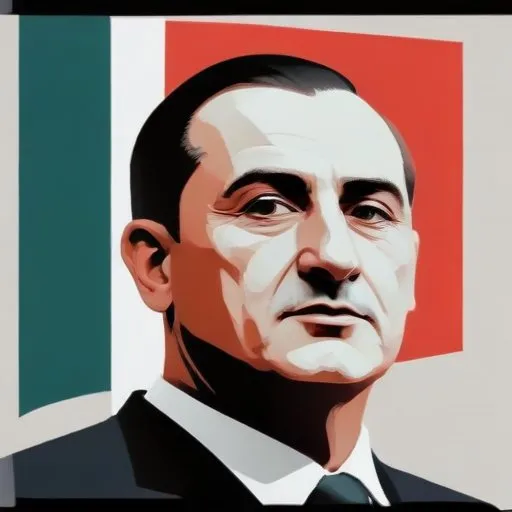
Prime Minister of Bulgaria from 1926 to 1931, known for his role in the country's interwar period and his attempts to stabilize the economy.
Andrey Lyapchev is renowned for being the Prime Minister of Bulgaria in three consecutive governments, leaving an indelible mark on the country's political landscape. His leadership, which spanned several decades, was instrumental in shaping Bulgaria's future, earning him a revered place in the nation's history.
Born on November 30, 1866, in Resen, Macedonia, which was then part of the Ottoman Empire, Lyapchev's family had a rich history in the region. His family, believed to have originated from a Megleno-Romanian potter named Dore, had settled in Resen in the 18th century.
Lyapchev's education was marked by turmoil, with his local school in Resen being shut down by Ottoman authorities after the April Uprising of 1876. He subsequently spent three years helping his brother Georgi run his shop in Bitola, taking on additional responsibilities after their father's death. In 1879, he enrolled in the Bitola gymnasium and later moved to the Bulgarian Men's High School of Thessaloniki in 1881.
It was during his time at the Thessaloniki school that Lyapchev was influenced by his teacher, Trayko Kitanchev, who played a significant role in shaping his political ideologies. Following Kitanchev's dismissal in 1884, Lyapchev moved to Plovdiv, then the main city of the Autonomous Province of Eastern Rumelia, where he became acquainted with Zahari Stoyanov and the Bulgarian Secret Central Revolutionary Committee.
This connection led to Lyapchev's involvement in the Unification of Eastern Rumelia and the Principality of Bulgaria, which was eventually proclaimed on September 6, 1885. He was briefly arrested by authorities, but later joined the First Volunteers Corps during the Serbo-Bulgarian War.
Lyapchev's political career was marked by his three consecutive terms as Prime Minister of Bulgaria, during which he implemented significant reforms and policies that shaped the country's development. His leadership was characterized by a strong sense of nationalism and a commitment to Bulgaria's growth and prosperity.
Throughout his career, Lyapchev navigated complex political landscapes, often finding himself at the center of controversies and power struggles. Despite these challenges, he remained a prominent figure in Bulgarian politics, earning the respect of his peers and the admiration of the Bulgarian people.
Andrey Lyapchev's legacy extends far beyond his political achievements. He played a crucial role in shaping Bulgaria's destiny, leaving behind a lasting impact on the country's politics, economy, and society. His commitment to nationalism and Bulgarian unity continues to inspire generations of Bulgarians, cementing his place as one of the nation's most revered leaders.
