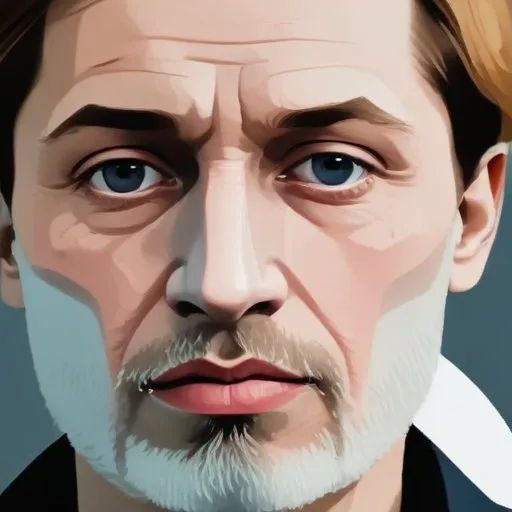
Andrey Voronikhin

Andrey Voronikhin

Andrey Voronikhin was born on October 17th, 1759

Full Name: Andrey Nikiforovich Voronikhin
Occupation: Russian architect
Nationality: Russian
Profession: Painter
Notable Work: Kazan Cathedral
Birth Date: 1759
Death Date: 1814
Birth Place: Novgorod, Russia

Designed grandiose Neoclassical buildings and painted landscapes, blending Russian and European styles. His works adorn St. Petersburg and Moscow, showcasing 18th-century Russian architecture and art.

Written by: Oliver Wren Oliver Wren

Andrey Voronikhin: The Architectural Maestro of Imperial Russia

Andrey Voronikhin, a Russian architect and painter, is renowned for his contributions to the development of the monumental Russian Empire style, leaving an indelible mark on the country's architectural landscape. His magnum opus, the Kazan Cathedral in Saint Petersburg, stands as a testament to his innovative and visionary approach to classicism.

The Humble Beginnings of a Visionary

Born on October 28, 1759, in the village of Novoe Usolye, Perm Oblast, Voronikhin was a serf of the Stroganov family, one of the most influential and wealthy noble families in Russia. It is believed that he was fathered by Count Alexander Sergeyevich Stroganov, the President of the Imperial Academy of Arts.

The Making of a Master

Voronikhin's artistic talents were recognized at an early age, and he was sent to study in Moscow in 1777. Under the guidance of prominent architects and artists, such as Vasili Ivanovich Bazhenov and Matvey Fyodorovich Kazakov, Voronikhin honed his skills in painting and architecture. In 1785, he was liberated from serfdom, and in 1786, he embarked on a journey to France and Switzerland to study architecture, mechanics, and mathematics.

A Legacy of Innovation

Voronikhin's work was characterized by simplicity, refinement, and a strict classical order, which he applied to his architectural projects. Some of his notable works include:

Teaching and Inspirations

In 1797, Voronikhin was awarded the academic title of Academician by the Academy of Fine Arts for his paintings "Hermitage" (1793) and "Russian Museum" (1797). He went on to teach at the Academy of Fine Arts, inspiring a new generation of architects and artists.

A Lasting Legacy

Andrey Voronikhin's contributions to Russian architecture and art are immeasurable. His innovative approach to classicism paved the way for future generations of architects, and his work continues to inspire and awe people to this day. Voronikhin's legacy is a testament to the power of creativity and innovation, earning him a permanent place in the annals of Russian history.

Timeline
1759
Born in Novgorod, Russia
Andrey Voronikhin was born in Novgorod, Russia, and would go on to become a renowned architect and painter.
1779
Studied with Anton Nevsky
Voronikhin studied with Anton Nevsky, a prominent Russian architect and educator.
1785
Designed the Smolny Institute
Voronikhin designed the Smolny Institute for Noble Maidens in St. Petersburg, Russia, one of his most famous architectural works.
1797
Appointed to the Imperial Academy of Arts
Voronikhin was appointed to the Imperial Academy of Arts in St. Petersburg, a prestigious institution for Russian artists.
1814
Died in St. Petersburg, Russia
Andrey Voronikhin passed away in St. Petersburg, leaving behind a legacy as a prominent Russian architect and painter.
Andrey Voronikhin

Andrey Voronikhin Quiz

What style of architecture did Andrey Voronikhin primarily design?

Score: 0/5
FAQ
What was Andrey Voronikhins profession?
Andrey Voronikhin was a Russian architect and painter, known for his work in the Neoclassical style.
What are some of Voronikhins most famous works?
Voronikhins most famous works include the Kazan Cathedral in St. Petersburg and the Mining Institute, both of which showcase his mastery of Neoclassical architecture.
What influenced Voronikhins architectural style?
Voronikhins architectural style was influenced by his studies in Italy and his exposure to the works of famous architects such as Andrea Palladio.
What role did Voronikhin play in the development of Russian architecture?
Voronikhin played a significant role in the development of Russian architecture, helping to introduce Neoclassical styles to Russia and paving the way for future generations of architects.
What is Voronikhins legacy in architecture?
Voronikhins legacy in architecture is one of elegance and sophistication. His works continue to be admired and studied by architects and art lovers today.

Related People:

Andrey Rublev

29 Years Old

Russian tennis player who won Olympic gold and holds multiple ATP titles, known for his powerful serve and dominant playing style.