


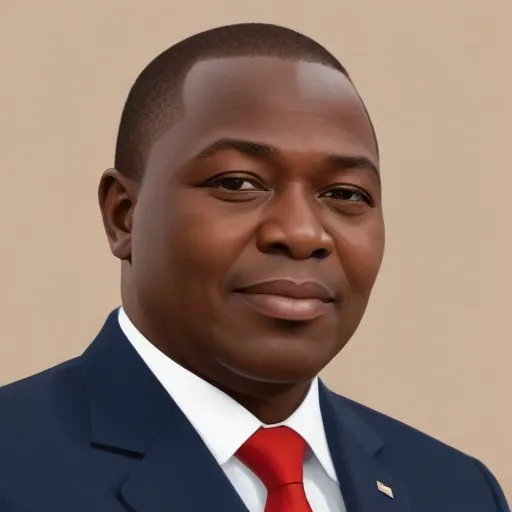
The first engineer to become President of the Central African Republic, serving from 1993 to 2003 and known for his efforts to reform the country's economy and infrastructure. He was ousted in a coup after allegations of corruption and nepotism.
AngeFelix Patass is most notably recognized as the President of the Central African Republic from 1993 to 2003, marking a significant era in the country's history. He was the first president to be elected through a democratic process, which was facilitated by the United Nations Electoral Assistance Unit and donor pressure on President Andre Kolingba.
Patass was born on January 25, 1937, in Paoua, the capital of the northwestern province of Ouham-Pend in the colony of Ubangi-Shari, which is now the Central African Republic. He belonged to the Sara-Kaba ethnic group, which predominates in the region around Paoua. His father, Paul Ngakoutou, was a member of the Sarakaba people and worked for the colonial administration in the Province of Ouham-Pend, while his mother, Véronique Goumba, belonged to the Kare ethnic group of northwestern Ubangi-Shari.
In 1993, Patass was elected as the President of the Central African Republic, marking a significant milestone in the country's history. His election was facilitated by the United Nations and was widely regarded as a relatively fair and democratic process. During his first term, Patass faced challenges from military mutinies in 1996 and 1997, which led to increasing conflict between northerners and southerners. Expatriate mediators and peacekeeping troops were brought in to negotiate peace accords and maintain law and order.
In 1999, Patass was re-elected for a second term, but his popularity began to wane. He increasingly lost the support of his longtime allies, as well as the French, who had intervened to support him during his first term. This plummeting support ultimately led to his downfall, and he was ousted in a coup d'état led by rebel leader François Bozizé in 2003. Patass went into exile in Togo, marking the end of his turbulent reign.
Patass's presidency was marked by periods of relative stability, but also significant challenges and controversies. His leadership was often criticized for being authoritarian and corrupt. Despite this, he remains an important figure in the Central African Republic's history, and his presidency marked a significant shift towards democratization.
Little is known about Patass's personal life, but it is reported that he had several wives and children. His relationships with his allies and international partners were often tumultuous, and his authoritarian leadership style alienated many who had initially supported him.
Patass was awarded several honors during his presidency, including the Grand-Croix de l'Ordre National de la République Centrafricaine (National Order of the Central African Republic) and the Médaille de la République Française (Medal of the French Republic).
Despite his controversial legacy, AngeFelix Patass remains an important figure in the Central African Republic's history, and his presidency marked a significant shift towards democratization.
79 Years Old
A former general who seized power in a coup, ruling the Central African Republic with an iron fist, marked by human rights abuses and corruption. He was ousted in 2013 after a decade in power.
