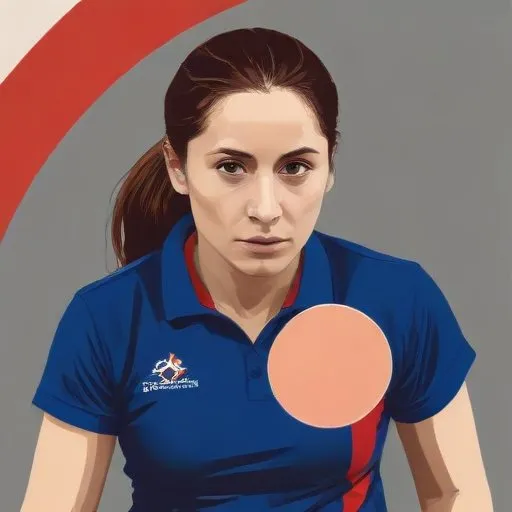
Angelica Rozeanu: The Table Tennis Legend Who Conquered the World
The Unstoppable Romanian Champion
Angelica Rozeanu is widely regarded as the most successful female table tennis player in the history of the sport, with an unprecedented six consecutive World Championship titles from 1950 to 1955. Her remarkable career spanned over two decades, earning her a plethora of accolades and recognition that solidified her position as a legend in the world of table tennis.
Early Life and the Road to Success
Born on October 15, 1921, in Romania, Angelica Rozeanu began her table tennis journey at the tender age of eight, while recovering from scarlet fever. Her natural talent and dedication soon paid off, as she won the Romanian Cup at just 12 years old. By 1936, she was crowned the Romanian national champion, a title she would hold onto for the next 21 years, excluding the war years.
World War II and the Interruption of a Promising Career
Rozeanu's career was put on hold during World War II, as she was barred from entering a gymnasium in Romania from 1940 to 1944, forcing her to pause her table tennis pursuits. However, this setback didn't deter her from making a comeback, and she returned to the sport with renewed passion and determination.
The Unbeatable Champion
Rozeanu's first major win came in 1938, when she claimed the Hungarian Open title. This was just the beginning of an incredible streak that would see her dominate the sport for years to come. Her first World Championship title in 1950 marked the start of an unprecedented six-year winning run, a feat yet to be matched in the history of table tennis.
A Legacy Beyond the Court
Rozeanu's impact on table tennis extended beyond her impressive playing career. She served as the President of the Romanian Table Tennis Commission from 1950 to 1960, playing a crucial role in shaping the sport in her native country.
Later Life and Recognition
In 1960, Rozeanu emigrated to Israel, where she continued to play and coach table tennis. She won the 1961 Maccabiah Games Women's Table Tennis Championship and was Israel's champion in 1960-1962. Throughout her life, Rozeanu received numerous honors and accolades, including the Romanian title of Merited Master of Sport, four Order of Work honors, the Knesset Medal, and the title of Honorary Citizen of Haifa.
Immortalized in the Hall of Fame
Angelica Rozeanu's outstanding contributions to table tennis have been recognized globally. She was inducted into the International Jewish Sports Hall of Fame in 1981 and into the ITTF Hall of Fame in 1995, solidifying her position as one of the greatest table tennis players of all time.
A Lasting Impact on the Sport
Rozeanu's remarkable career and legacy continue to inspire generations of table tennis enthusiasts around the world. Her unwavering dedication, perseverance, and passion for the sport have left an indelible mark on the world of table tennis, ensuring her place as one of the all-time greats.
FAQ
Who is Angelica Rozeanu, the Romanian-Israeli table tennis player?
Angelica Rozeanu was a Romanian-Israeli table tennis player, born on October 12, 1922, in Bucharest, Romania. She is best known for her success in international competitions and her pioneering role in Israeli sports.
What were Angelica Rozeanus major table tennis accomplishments?
Angelica Rozeanu won 17 world championships and 30 European championships, and was a dominant force in womens table tennis in the 1950s and 1960s.
Did Angelica Rozeanu have a successful coaching career?
Yes, Angelica Rozeanu had a successful coaching career, serving as a coach and mentor for the Israeli national table tennis team, and developing young players.
What is Angelica Rozeanus legacy in Israeli sports?
Angelica Rozeanus legacy is one of pioneering achievement and dedication to the development of Israeli sports, inspiring generations of athletes and promoting the growth of table tennis in Israel.
What awards did Angelica Rozeanu receive for her table tennis career?
Angelica Rozeanu received several awards for her table tennis career, including the Israel Prize in 1962, and induction into the International Jewish Sports Hall of Fame in 1981.