


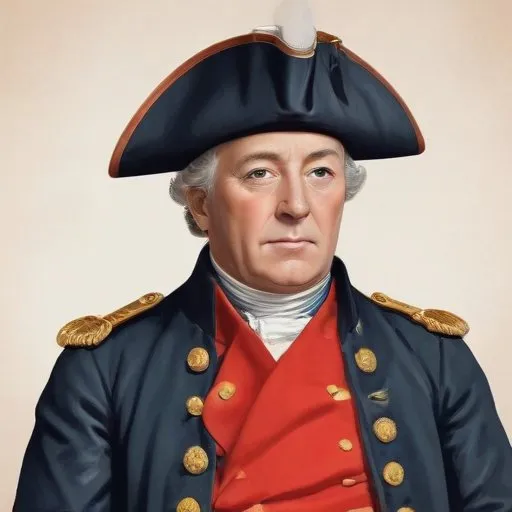
Led a decisive victory at the Battle of Fallen Timbers, securing American control over the Northwest Territory, and later served as a congressman from Georgia.
Anthony Wayne, affectionately known as "Mad Anthony," was a renowned American soldier, officer, statesman, and one of the Founding Fathers of the United States. He earned his reputation as a fearless military leader during the American Revolutionary War, where his bold tactics and unwavering commitment to the cause earned him a promotion to brigadier general.
Wayne's military career was marked by several notable battles and campaigns. He played a crucial role in the Invasion of Quebec, the Philadelphia campaign, and the Yorktown campaign. Although he suffered a defeat in the Battle of Paoli, he redeemed himself by leading a daring night attack at the Battle of Stony Point, which earned him the Congressional Gold Medal.
Wayne's leadership skills and strategic thinking were instrumental in shaping the Continental Army's victories. He was known for his ability to inspire his troops and make bold decisions in the face of adversity. His military prowess and innovative tactics earned him the respect of his peers and the admiration of the American public.
After the Revolutionary War, Wayne pursued a career in politics and business. He held a brief stint in Congress and later became a successful businessman. However, it was his return to military service that cemented his legacy as a national hero.
In 1792, Wayne was recalled by President Washington to command the U.S. forces in the Northwest Indian War. He led a decisive campaign against the British-backed Northwestern Confederacy, ultimately defeating the alliance and securing a crucial victory for the young American nation. The Treaty of Greenville, negotiated by Wayne, marked the end of the war and the beginning of a new era of peace with the Native American tribes.
Despite his many accomplishments, Wayne's legacy has been the subject of controversy and debate in recent times. Some critics have questioned his tactics and the impact of his military campaigns on Native American communities. However, his role as a Founding Father and his contributions to the birth of the United States cannot be denied.
Wayne was born on January 1, 1745, in Chester County, Pennsylvania. He attended the College of Philadelphia and worked as a tanner and surveyor before entering politics. He was a member of the Society of the Cincinnati of the state of Georgia and was elected to the American Philosophical Society in 1780.
"Victory is always possible for the person who refuses to stop fighting." - Anthony Wayne
Anthony Wayne's legacy is a testament to the complexities of American history. While his military campaigns and leadership skills are undeniable, his actions must be considered in the context of the time. As historians continue to reexamine the past, Wayne's place in the pantheon of American heroes remains a subject of debate and discussion.
Born in 1732
The first President of the United States, a military hero who led the country to independence, and set the standard for the office of the presidency. He's known for his honesty, integrity, and leadership skills.
Born in 1742
A skilled military strategist who played a crucial role in the American Revolutionary War, leading the Continental Army to several victories against the British.
Born in 1750
First U.S. Secretary of War, instrumental in shaping the country's military and defense strategy, and a key figure in the American Revolutionary War.
Born in 1741
A traitorous American general who defected to the British Army during the American Revolutionary War, leading to a pivotal moment in American history.
Born in 1732
A Founding Father who played a key role in the American Revolution, serving as President of the Continental Congress and helping to draft the Declaration of Independence.
Born in 1736
A pioneering figure in American history, he played a key role in the American Revolution and is famous for declaring "Give me liberty or give me death!" in a speech that helped galvanize the colonial resistance against British rule.
Born in 1737
First Governor of Massachusetts, instrumental in American independence and famously signed the Declaration of Independence with a large, bold signature .
Born in 1735
This American patriot and artisan is famous for his midnight ride during the American Revolution, warning colonists that the British were coming, and for his iconic engravings, including the Boston Massacre depiction.
