


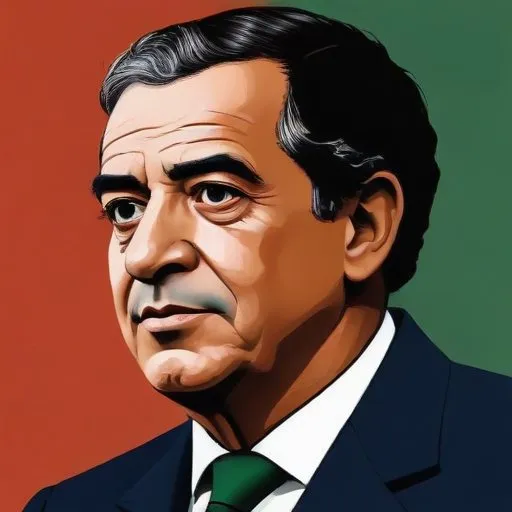
The 119th Prime Minister of Portugal, leading the country since 2015, known for his progressive policies and efforts to revitalize the economy. He's also a key figure in the European Union's politics.
As the 118th Prime Minister of Portugal, António Costa has left an indelible mark on the country's political landscape, serving from 2015 to 2024. During his tenure, he presided over three consecutive governments, implementing significant reforms and shaping the nation's economy, justice system, and international relations.
Born on July 17, 1961, in Lisbon, Portugal, Costa is the son of writer Orlando da Costa and journalist Maria Antónia Palla. His father, born in Maputo, Mozambique, to a Goan family, instilled in him a strong sense of social responsibility and justice.
Costa graduated from the Faculty of Law of the University of Lisbon in the 1980s, where he first entered politics and was elected as a Socialist deputy to the municipal council. After completing his mandatory military service in 1987, he briefly practiced law before committing to a life of public service.
Costa's political career spans over three decades, with various key roles that have prepared him for the highest office. He served as Secretary of State for Parliamentary Affairs (1995-1997), Minister of Parliamentary Affairs (1997-1999), Minister of Justice (1999-2002), and Minister of Internal Administration (2005-2007).
In 2007, he became the Mayor of Lisbon, a position he held until 2015. During this period, he gained recognition for his innovative urban planning and social policies, earning him the respect of citizens and fellow politicians alike.
As Prime Minister, Costa's central goal was to revitalize Portugal's economy, which had been struggling since the 2008 financial crisis. He implemented policies aimed at stimulating growth, reducing unemployment, and increasing competitiveness.
Notable achievements during his tenure include the reduction of the budget deficit, the recapitalization of banks, and the promotion of renewable energy sources. Costa's government also introduced progressive social policies, such as increasing the minimum wage and expanding access to healthcare.
Despite his achievements, Costa's premiership was not without controversy. In 2023, he resigned following an investigation involving members of his government in connection with alleged corruption and malfeasance in handling lithium mining and hydrogen projects.
Although his tenure was marked by controversy, Costa's commitment to social justice and economic development has earned him a reputation as a dedicated and visionary leader. His legacy continues to shape Portugal's future, with many of his policies remaining in place or influencing subsequent governments.
Following his departure as Prime Minister, Costa will take up the post of President of the European Council in December 2024. This new role will allow him to continue shaping European policy and promoting international cooperation.
As António Costa embarks on this new chapter, his dedication to the values of social justice, democracy, and human rights will continue to inspire and guide European leaders and citizens alike.
These words reflect Costa's unwavering commitment to creating a better world, where everyone has access to opportunities and resources. As he continues to shape the course of European politics, his vision and leadership will remain a beacon of hope for generations to come.
Throughout his life, António Costa has demonstrated unwavering dedication to public service, social justice, and European cooperation. His remarkable journey serves as an inspiration to leaders and citizens alike, a testament to the power of vision, perseverance, and commitment to creating a better world.
77 Years Old
The first Portuguese to lead the United Nations, he's a champion of global cooperation, human rights, and sustainable development. He's a prominent voice on the world stage, advocating for climate action and social justice.
62 Years Old
The 118th Prime Minister of Portugal, an economist-turned-politician who led the country from 2011 to 2015, implementing austerity measures to address the European sovereign debt crisis. He's known for his efforts to stabilize Portugal's economy during a tumultuous period.
72 Years Old
Former Minister of Foreign Affairs, known for shaping Portugal's international relations and EU policies.
70 Years Old
The first Prime Minister of Portugal to serve two consecutive terms, known for his efforts to reform the country's economy and his later role as President of the European Commission.
54 Years Old
The current Prime Minister of Spain, leading the country's government and implementing policies to address economic and social issues. Known for his progressive stance on issues like climate change and social justice.
71 Years Old
Luxembourg's Prime Minister from 1995 to 2013, known for his key role in shaping the European Union's economic and monetary policies. He was the President of the European Commission from 2014 to 2019, overseeing the EU's executive body.
72 Years Old
The first female Chancellor of Germany, serving for 16 years, known for her leadership during the European sovereign-debt crisis and her role in shaping the European Union's policy. She's a highly influential figure in modern politics.
