


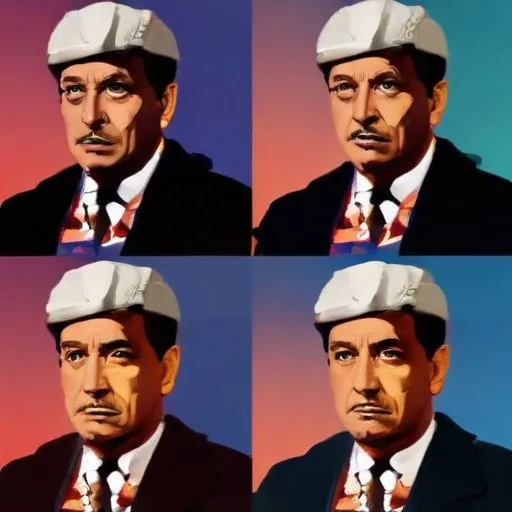
The first Spanish Governor of Louisiana, who established Spanish rule in the region and introduced reforms to promote economic growth and development. He's also known for his scientific contributions, including the discovery of platinum.
Antonio de Ulloa, a Spanish naval officer, scientist, and administrator, is renowned for his remarkable contributions to the fields of astronomy, natural history, and geodesy. As a member of the French Geodesic Mission to South America, Ulloa's groundbreaking observations and discoveries in the 1730s earned him an international reputation as a leading savant.
Born on January 12, 1716, in Seville, Spain, Ulloa hailed from an aristocratic and intellectually distinguished family. His father, Bernardo de Ulloa, was a notable economist, and his brother Fernando would later become an engineer and chief of works of the Canal de Castilla.
Destined for a naval career, Ulloa embarked on the galleon San Luis at the age of 13, bound for Cartagena de Indias in present-day Colombia. After returning to Cádiz, he entered the Real Compía de Guardias Marinas (Spanish Naval Academy) in 1733.
In 1735, Ulloa joined the French Geodesic Mission to South America, led by Pierre Bouguer and Charles-Marie de La Condamine. This eight-year expedition aimed to measure the length of a degree of latitude at the equator, a crucial task in the development of cartography.
During this period, Ulloa made significant observations in astronomy, natural history, and geodesy. His reports included the first published accounts of the metal platinum, later identified as a new chemical element.
Ulloa's findings earned him recognition from prominent scientific institutions. He was elected as a Fellow of the Royal Society of London in 1746 and as a foreign member of the Royal Swedish Academy of Sciences in 1751.
Ulloa served the Spanish Crown as governor of Huancavelica (1758-1764) in Peru and superintendent of the quicksilver mines in the region. Following the defeat of France in the Seven Years' War, Ulloa was appointed as the first Spanish governor of Louisiana in 1766.
However, his rule was strongly resisted by the French Creole colonists in New Orleans, who expelled him from the city in the Louisiana Rebellion of 1768. Ulloa continued to serve in the Spanish Navy, achieving the rank of vice-admiral and becoming its chief of operations.
Antonio de Ulloa's pioneering work in South America laid the foundation for future scientific expeditions and contributed significantly to our understanding of the natural world. His legacy extends beyond his scientific achievements, serving as an inspiration to future generations of explorers, scientists, and sailors.
Through his remarkable achievements, Antonio de Ulloa solidified his place in history as a trailblazing Spanish naval officer and scientist, leaving a lasting impact on the development of science, exploration, and cartography.
Born in 1713
King of Spain from 1746 to 1759, known for his cultural and economic reforms, and for being the first Spanish monarch to visit Catalonia in over a century.
Born in 1716
The Enlightened Despot who reformed Spain, promoting education, arts, and economic growth, and is credited with modernizing Madrid.
