


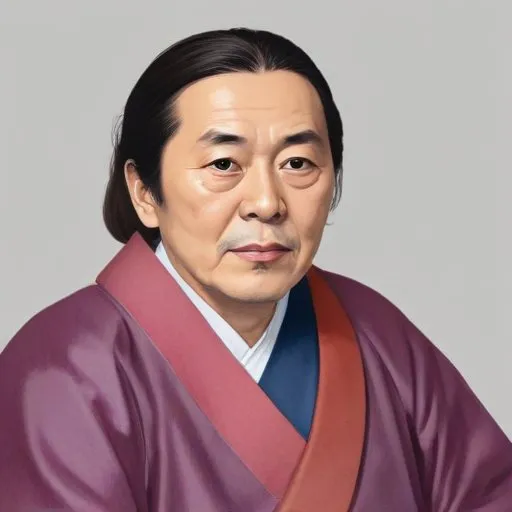
A prominent Confucian scholar and statesman who served as a chief advisor to the shogun, known for his efforts to reform Japanese politics and economy. He also wrote extensively on history, philosophy, and literature.
Arai Hakuseki was a renowned Confucianist, scholar-bureaucrat, and politician who advised the shogun Tokugawa Ienobu during the Edo period in Japan. He is best known for his influential policies and writings that had a lasting impact on Japanese history and culture.
Hakuseki was born on March 24, 1657, in Edo (now Tokyo), Japan. His father, Arai Masazumi, was a samurai of the Kururi Domain. From a young age, Hakuseki demonstrated exceptional intelligence and a passion for learning. According to legend, at just three years old, he was able to copy a Confucian book written in Kanji characters.
Hakuseki's intellectual prowess earned him a position as a retainer of Hotta Masatoshi, a powerful daimyo. However, after Masatoshi's assassination, the Hotta clan's fortunes declined, and Hakuseki chose to become a ronin (masterless samurai) to pursue his studies. He eventually became a student of the prominent Confucianist Kinoshita Junan.
In 1693, Hakuseki was summoned to serve the Tokugawa shogunate as a brain strategist for Tokugawa Ienobu. He quickly rose through the ranks, displacing the influential Hayashi advisers to become the leading Confucianist for Ienobu and his successor, Tokugawa Ietsugu.
During his tenure, Hakuseki implemented several significant policies aimed at strengthening Japan's economy and stabilizing its politics. He introduced reforms to promote agriculture, commerce, and industry, and established a national grain reserve to alleviate famine. His policies also focused on reducing debt, promoting education, and strengthening the samurai class.
After leaving his post, Hakuseki dedicated himself to writing and produced numerous works on Japanese history, Confucianism, and Occidental studies. His writings provide valuable insights into Japan's Edo period, offering a unique perspective on the country's politics, economy, and culture during that time.
Arai Hakuseki's contributions to Japanese history and culture are undeniable. His policies shaped the Edo period, and his writings continue to influence Japanese thought and intellectual discourse. Today, he is remembered as one of Japan's most important Confucianists and scholars of the Edo period.
Hakuseki was known for his strong character and intellect, earning him the nickname "Hi no Ko" or "Child of Fire." He was buried in Asakusa, Tokyo, and later moved to Nakano, Tokyo, where he rests in the Kotokuji temple.
Arai Hakuseki's remarkable life and achievements continue to inspire and educate people to this day, offering a fascinating glimpse into Japan's rich cultural heritage.
Born in 1662
The seventh shogun of the Tokugawa dynasty, who ruled Japan from 1706 to 1713, is most known for his efforts to reform the government and economy, as well as his patronage of the arts.
Born in 1646
The fifth shogun of the Tokugawa dynasty, known for his extreme animal protection laws and brutal suppression of Christianity, earning him the nickname "The Dog Shogun."
