


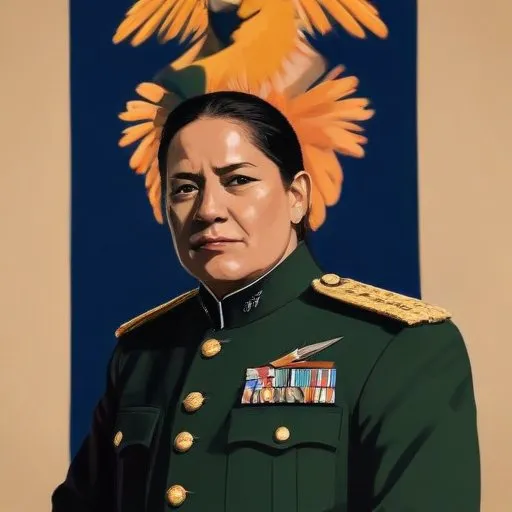
A Maori leader who played a key role in New Zealand's colonial era, known for his complex and often contradictory actions, including fighting against British colonization and later serving as a politician. He's also infamous for his involvement in a notorious murder.
Arapeta Awatere was a renowned Maori leader, military commander, and welfare officer who played a pivotal role in New Zealand's history, particularly during World War II. He is best known for his exceptional leadership as the commander of the Maori Battalion, a prestigious infantry battalion composed of Maori soldiers.
Born on April 25, 1910, in Tproa, on the East Coast of New Zealand, Awatere was the son of Petuere W Hkopa Awatere, a farmer, and his wife Hni Hautao. He was affiliated with the Te WhnauaHinetpora hap subtribe of the Ngti Porou iwi tribe through his father and Ngti Hine iwi via his mother.
Awatere's early years were spent in Northland, at his mother's marae at Whangaruru, before he returned to the East Coast at the age of 6. His paternal family supervised his education, ensuring that he was immersed in Maori tradition and arts. He became highly skilled in Maori weaponry, particularly the taiaha staff weapon.
Awatere gained an interpreter qualification in Maori in 1925 and joined the Native Department. He also joined the Territorial Force, immersing himself in military history. For his work, he was based in Rotorua initially and then Wellington.
In 1931, Awatere married Elsie Bella Rogers, who was of the Ngti Whakaue iwi. The couple would have five daughters, including Donna Awatere Huata, who was born in 1949 and later became a member of parliament.
Awatere's personal life was not without controversy. He left his family for two years after the birth of his youngest daughter, a decision that was deeply disappointing to him.
Awatere's contributions to New Zealand's history are immeasurable. His leadership during World War II played a significant role in the country's military efforts, and his work as a Maori welfare officer helped to improve the lives of Maori people.
Today, Awatere is remembered as a visionary leader who worked tirelessly to promote Maori welfare and dignity. His legacy continues to inspire future generations, and his contributions to New Zealand's history will never be forgotten.
"Ka whawhai tonu ahau ki runga o te whenua o tna ttipuna" - "I will fight to the top of the land of my ancestors."
This quote, often attributed to Awatere, reflects his unwavering commitment to his people and his homeland.
Awatere's life and work have had a profound impact on modern New Zealand society. He is remembered as a pioneering figure who worked to promote Maori welfare and dignity, and his legacy continues to inspire future generations.
Today, Awatere's contributions are celebrated throughout New Zealand, and his name is synonymous with bravery, leadership, and dedication to his people.
