


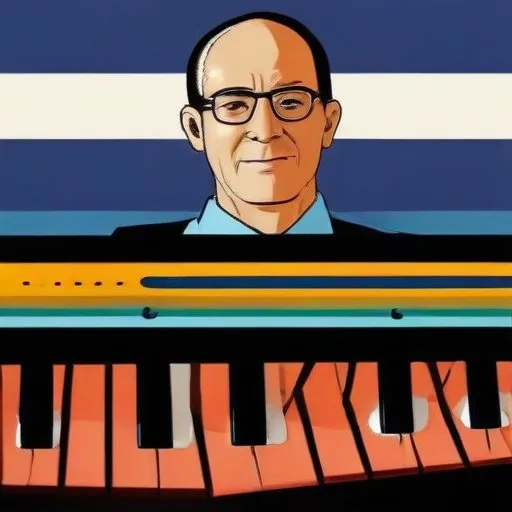
A talented musician who played the vibraphone and marimba, blending jazz with exotic sounds, creating a unique, laid-back, and sophisticated style. His music evokes a sense of tropical paradise and relaxation.
Arthur Lyman, the renowned Hawaiian jazz vibraphone and marimba player, is best known for popularizing the style of faux-Polynesian music during the 1950s and 1960s, later dubbed as exotica. His elaborate and colorful percussion, deep bass, and 3-dimensional recording soundstage made his albums a favorite among stereophonic LP enthusiasts.
Born on February 2, 1932, on the island of Kauai, Hawaii, Arthur Lyman was the youngest of eight children to a Hawaiian mother and a father of Hawaiian, French, Belgian, and Chinese descent. After his father lost his eyesight in an accident, the family settled in Makiki, a subdistrict of Honolulu. It was here that Lyman's father, a riveter, introduced him to music, locking him in a room with Benny Goodman records to learn "good music."
At the tender age of 8, Lyman made his public debut playing his toy marimba on the Listerine Amateur Hour on radio station KGMB, Honolulu, performing Twelfth Street Rag. He won a bottle of Listerine, marking the beginning of his musical journey. Lyman joined his father and brother in playing USO shows on the bases at Kaneohe and Pearl Harbor, where he developed his skills in the four-mallet style of playing.
By the age of 14, Lyman turned professional, joining a group called the Gadabouts, playing vibes in the cool-jazz style. He worked at Leroys, a nightclub in Kakaako, earning about $60 a week. Lyman's unique sound, which blended traditional Hawaiian music with elements of jazz and exotica, gained popularity in the 1950s and 1960s.
Arthur Lyman's music had a significant impact on the development of lounge music and exotica. His albums, such as Taboo, Bahia, and , became staples of the genre, showcasing his mastery of percussion and marimba. Lyman's music also influenced the work of other exotica musicians, such as Martin Denny and Robert Drasnin.
Today, Lyman's legacy extends beyond the world of music. His unique sound and style have inspired generations of musicians, DJs, and music enthusiasts. He remains the king of lounge music, a true pioneer in the world of exotica.
Arthur Lyman's contribution to music is undeniable, and his legacy continues to inspire and influence musicians to this day. His unique sound, which blended traditional Hawaiian music with elements of jazz and exotica, has left an indelible mark on the world of music.
"I had a little toy marimba, a sort of bass xylophone, and from those old 78 rpm disks I learned every note Lionel Hampton recorded with the Goodman group."
Arthur Lyman's story is a testament to the power of passion, dedication, and innovation in music. His legacy serves as a reminder of the significance of exploring new sounds and styles, and the impact it can have on generations to come.
Born in 1911
A pioneer of exotica music, blending jazz and tropical rhythms to create a unique sound that evokes a sense of escapism and luxury. Known for his iconic album "Quiet Village".
98 Years Old
A renowned clarinetist and composer, he blended jazz and classical music to create a unique sound, scoring films and TV shows, including the cult classic "Twilight Zone" series.
Born in 1908
A renowned musician who created lush, orchestral arrangements and led a successful recording career, known for his iconic instrumental versions of popular songs.
Born in 1922
A renowned pianist and composer who crafted exotic, jazzy scores for films and TV shows, evoking a sense of tropical paradise and retro futurism.
