


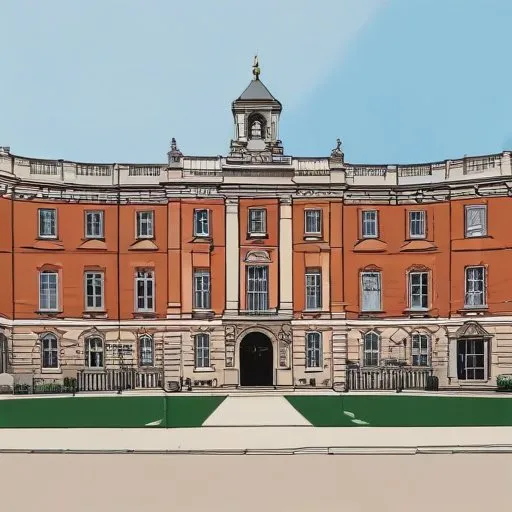
Designed iconic buildings like the Victoria and Albert Museum and the Buckingham Palace facade, blending classical and modern styles. Known for his grand, imposing structures that define London's landscape.
Aston Webb, a renowned British architect, is celebrated for his iconic designs that have left an indelible mark on England's architectural landscape. His crowning achievement, the majestic facade of Buckingham Palace, stands as a testament to his exceptional skill and artistry.
Born on May 22, 1849, in Clapham, South London, Webb was the son of a watercolourist and former pupil of the landscape artist David Cox. This artistic heritage nurtured his creative instincts, which he would later channel into a successful architectural career.
Webb's professional journey began in 1866, when he articled with the firm of Banks and Barry. Following a year-long sojourn in Europe and Asia, he established his own practice in 1874. The early 1880s saw him join the Royal Institute of British Architects and form a fruitful partnership with Ingress Bell. Their maiden collaboration, the winning design for the Victoria Law Courts in Birmingham (1886), set the tone for a string of public building commissions that would span over two decades.
Webb's contributions to architecture were acknowledged with numerous honors, including:
Aston Webb's architectural creations continue to inspire awe and admiration. His commitment to excellence has left a lasting legacy, shaping the built environment and influencing generations of architects. As a testament to his enduring impact, Webb's works remain integral to England's cultural heritage.
Through his remarkable body of work, Webb has demonstrated the power of architecture to elevate and transform spaces, leaving an indelible mark on the world of art and design.
In his later years, Webb was assisted by his sons, Maurice and Philip. He passed away on August 21, 1930, in Kensington, London, leaving behind a rich architectural legacy that continues to inspire and delight.
Born in 1868
A pioneering figure in the Glasgow School of Art, this visionary blended elegant lines, flowing curves, and organic forms to create iconic furniture, textiles, and buildings that epitomize Art Nouveau style.
Born in 1880
Designed iconic British landmarks, including the red telephone box, a symbol of British culture and identity.
Born in 1869
Designed iconic buildings that blended traditional and modern styles, including the India Gate war memorial and British government buildings in New Delhi.
Born in 1900
A pioneering graphic designer, painter, and photographer who merged art and technology to create visually striking and influential works, particularly in typography and corporate branding.
Born in 1753
Designed iconic buildings that blended neoclassicism with innovative flair, leaving an indelible mark on London's architectural landscape.
