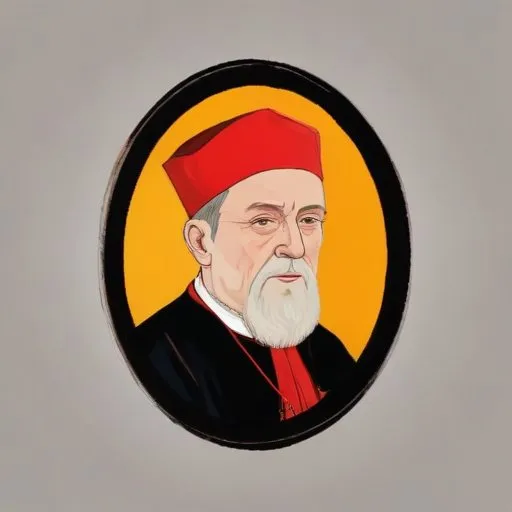
Athanasius Kircher: The Polymath Master of a Hundred Arts
A Jesuit Scholar of Unparalleled Curiosity
Athanasius Kircher, a 17th-century German Jesuit scholar, is renowned for his incredible range of interests and groundbreaking contributions to various fields, earning him the title "Master of a Hundred Arts." With over 40 major works to his name, Kircher's insatiable curiosity and thirst for knowledge led him to explore and write about comparative religion, geology, medicine, and more.
A Pioneer in Egyptology
Kircher's fascination with ancient Egyptian language and culture led him to claim the deciphering of hieroglyphic writing. Although most of his assumptions and translations were later proven incorrect, he correctly established the link between ancient Egyptian and Coptic languages. This achievement has led some to regard him as the founder of Egyptology. His work in this field, although flawed, laid the groundwork for future scholars and sparked a newfound interest in the mysteries of ancient Egypt.
A Sinologist and Cartographer
Kircher's curiosity extended to the Far East, where he wrote an exhaustive encyclopedia on China. This monumental work revealed the early presence of Nestorian Christians in China and attempted to establish connections between Egyptian and Christian cultures. His cartographic endeavors resulted in the creation of detailed maps, showcasing his remarkable skill in this field.
A Geologist and Paleontologist Ahead of His Time
Kircher's geological studies focused on volcanoes and fossils. He was one of the first researchers to observe microorganisms through a microscope, proposing that the plague was caused by an infectious microorganism. This groundbreaking idea was revolutionary for its time, and he even suggested effective measures to prevent the spread of the disease. His work in geology and paleontology showcased his innovative thinking and dedication to understanding the natural world.
A Technologist and Inventor
Kircher's inventive spirit led him to create innovative devices, including a magnetic clock, various automatons, and the first megaphone. His study of the principles behind the magic lantern, although not credited with its invention, demonstrated his fascination with technology and mechanical inventions.
A Legacy of Contrasts
During his lifetime, Kircher was a celebrated figure, respected for his vast knowledge and innovative ideas. However, towards the end of his life, his work was eclipsed by the rising rationalism of
René Descartes and others. It wasn't until the late 20th century that Kircher's work experienced a resurgence in popularity, with scholars appreciating the aesthetic qualities of his contributions.
A Life of Learning and Teaching
Kircher dedicated over 40 years to teaching at the Roman College, where he established a wunderkammer, a cabinet of curiosities that showcased his vast collection of artifacts and specimens. His passion for education and sharing knowledge inspired generations of students and scholars.
Trivia and Fun Facts
* Kircher was born on May 2, 1602, and died on November 27, 1680.
* He was compared to fellow Jesuit
Roger Joseph Boscovich and to
Leonardo da Vinci for his vast range of interests.
* Kircher's work has been translated into numerous languages, including Latin, German, Italian, and English.
* Despite his many achievements, Kircher's work was not without controversy, sparking debates among his contemporaries and later scholars.
A Lasting Legacy
Athanasius Kircher's remarkable life and contributions continue to inspire and fascinate scholars and enthusiasts alike. His boundless curiosity, innovative spirit, and dedication to sharing knowledge have left an indelible mark on the fields of Egyptology, Sinology, geology, and technology. As a true polymath, Kircher's legacy serves as a testament to the power of human ingenuity and the importance of interdisciplinary approaches to understanding the world around us.
FAQ
What was Athanasius Kirchers area of expertise?
Athanasius Kircher was a German Jesuit priest and polymath who made significant contributions to various fields, including Egyptology, geology, and music. He is often referred to as the father of Egyptology.
What is Athanasius Kirchers most famous work?
Athanasius Kirchers most famous work is Oedipus Aegyptiacus, a comprehensive treatise on ancient Egyptian language, culture, and history, published in 1652.
How did Athanasius Kirchers work influence later scholars?
Kirchers work had a significant impact on later scholars, including Jean-François Champollion, who deciphered the Rosetta Stone. Kirchers research also inspired others to study ancient cultures and languages.
What was Athanasius Kirchers role in the Jesuit order?
Athanasius Kircher was a Jesuit priest who worked as a professor of mathematics, physics, and oriental languages at the Roman College. He was also a prolific writer, publishing numerous books on various subjects.
Where did Athanasius Kircher die?
Athanasius Kircher died on November 28, 1680, in Rome, Italy, at the age of 78. He spent most of his life in Rome, where he taught and conducted research.