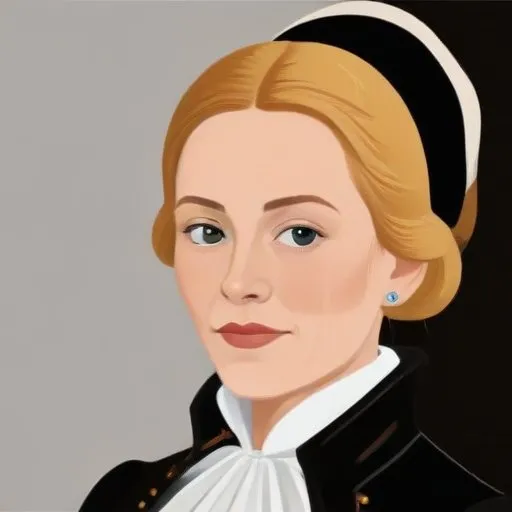
Augusta Marie of Holstein-Gottorp

Augusta Marie of Holstein-Gottorp

Augusta Marie of Holstein-Gottorp was born on February 6th, 1649

Full Name: Augusta Marie of Holstein-Gottorp
Place of Birth: Gottorp, Holstein
Nationality: German
Profession: Duchess of Holstein-Gottorp
Spouse: Frederick I of Prussia
Children: Frederick II of Prussia
Family: House of Holstein-Gottorp
Title: Duchess of Prussia

German noblewoman and Duchess of Holstein-Gottorp, known for her strong personality and influential role in 17th-century European politics. She played a key role in shaping the fate of the duchy and its relations with neighboring states.

Written by: Emma Thompson Emma Thompson

A German Noblewoman and Margravine of Baden-Durlach

Augusta Marie of HolsteinGottorp, a member of the esteemed House of Holstein-Gottorp, is best known for her marriage to Frederick VII, Margrave of Baden-Durlach, and her nine children who went on to shape the course of European royalty. Through her marriage, she held the title of Margravine of Baden-Durlach, solidifying her position as a prominent figure in 17th-century German nobility.

Early Life and Family

Born on February 6, 1649, to Frederick III, Duke of Holstein-Gottorp, and Duchess Marie Elisabeth of Saxony, Augusta Marie was part of a prominent noble family. Her father, Frederick III, was a prominent military leader and politician, who played a significant role in the Thirty Years' War.

Marriage and Children

Augusta Marie's marriage to Frederick VII, Margrave of Baden-Durlach, on May 15, 1670, in Husum, marked the beginning of a new chapter in her life. The couple had nine children, including:
  • Frederick Magnus (1672-1672)
  • Frederica Augusta (1673-1674)
  • Christina Sophia (1674-1676)
  • Klaudia Magdalene Elisabeth (1675-1676)
  • Catherine (1677-1746)
  • Charles III William, Margrave of Baden-Durlach (1679-1738)
  • Johanna Elisabeth (1680-1757)
  • Albertine Frederica (1682-1755)
  • Christopher of Baden-Durlach (1684-1723)
  • Charlotte Sophia (1686-1689)
  • Marie Anna (1688-1689)

Legacy and Impact

Augusta Marie's legacy lies in her devoted motherhood and her role in shaping the future of European royalty. Her children went on to marry into prominent noble families, securing alliances and strengthening the bonds between European royal houses. Through her offspring, Augusta Marie's influence extended beyond the borders of Baden-Durlach, leaving an indelible mark on European history.

Historical Context and Legacy

Living during a time of great turmoil and upheaval, Augusta Marie's life was shaped by the Thirty Years' War and the subsequent restructuring of European politics. Her marriage and family played a significant role in solidifying the position of the House of Baden-Durlach, a testament to her diplomatic skills and maternal devotion.

Inspirational Story and Motivation

Augusta Marie's life serves as a testament to the power of maternal love and devotion. Despite the challenges and uncertainties of her time, she remained committed to her family and played a crucial role in shaping the course of European history. Her story inspires us to remember the importance of family, loyalty, and dedication in our own lives.
Timeline
1649
Born in Gottorp
Augusta Marie of Holstein-Gottorp was born in 1649 in Gottorp, Duchy of Schleswig-Holstein (modern-day Germany), to a noble family.
1665
Married Duke Anthony Ulrich of Brunswick-Wolfenbüttel
Augusta Marie married Duke Anthony Ulrich of Brunswick-Wolfenbüttel, a powerful noble in the Holy Roman Empire, and became Duchess consort.
1684
Became regent for her son
After her husbands death, Augusta Marie became regent for her son, Augustus William, and ruled until he came of age.
1728
Died in Wolfenbüttel
Augusta Marie of Holstein-Gottorp died on February 25, 1728, in Wolfenbüttel, Duchy of Brunswick-Wolfenbüttel (modern-day Germany), after a life of royal service and family devotion.
1730
Buried in the Wolfenbüttel Castle
Augusta Marie was buried in the Wolfenbüttel Castle, the ducal residence of the Brunswick-Wolfenbüttel dynasty, in recognition of her role as Duchess consort and regent.
Augusta Marie of Holstein-Gottorp

Augusta Marie of Holstein-Gottorp Quiz

What was Augusta Marie of Holstein-Gottorp known for in 17th-century European politics?

Score: 0/5
FAQ
Who was Augusta Marie of Holstein-Gottorp?
Augusta Marie of Holstein-Gottorp was a German noblewoman who lived in the 17th century. She was a member of the Holstein-Gottorp family and played a significant role in the regions politics.
What was Augusta Marie of Holstein-Gottorps family background?
Augusta Marie of Holstein-Gottorp was born into the Holstein-Gottorp family, a powerful noble family in Germany. Her family was known for their influence in the regions politics.
What was Augusta Marie of Holstein-Gottorps role in the Thirty Years War?
Augusta Marie of Holstein-Gottorp played a significant role in the Thirty Years War, supporting the Protestant cause and advocating for peace in the region.
Who was Augusta Marie of Holstein-Gottorp married to?
Augusta Marie of Holstein-Gottorp was married to Anthony Ulrich, Duke of Brunswick-Wolfenbüttel, with whom she had several children.
What was Augusta Marie of Holstein-Gottorps legacy?
Augusta Marie of Holstein-Gottorp left a lasting legacy in the region, remembered for her strong leadership and advocacy for peace during a tumultuous period in European history.

Related People:

Augustus II the Strong

Born in 1670

A powerful Polish king who transformed his country into a major European power through military conquests and cultural achievements, earning him the nickname "the Strong".

Frederick I of Prussia

Born in 1657

King of Prussia from 1701 to 1713, crowned himself king, and established Berlin as his capital, transforming Prussia into a major power. He's known for his cultural and economic reforms.

Frederick I of Prussia

Born in 1657

King of Prussia from 1701 to 1713, crowned himself king, and established Berlin as his capital, transforming Prussia into a major power. He's known for his cultural and economic reforms.

Christian IX of Denmark

Born in 1818

The King of Denmark who unified the country and founded the modern Danish monarchy, known for his strong leadership and family ties to European royal houses.

Sophia Dorothea of Celle

Born in 1666

A German princess who was imprisoned in a castle for over 30 years after being accused of infidelity, and her tragic life inspired numerous literary and artistic works.

George II of Great Britain

Born in 1683

King of Great Britain and Ireland from 1727 to 1760, known for his military victories, particularly the Battle of Dettingen, and his role in the War of the Austrian Succession.

Peter the Great

Born in 1672

Reformed Russia's government, military, and culture, transforming it into a major European power. Known for modernizing and westernizing the country through numerous reforms and founding St. Petersburg.

Catherine I of Russia

Born in 1684

Wife of Peter the Great, she played a crucial role in his reign and later became the Empress of Russia, ruling from 1725 to 1727. She was a strong supporter of her husband's modernization policies.