


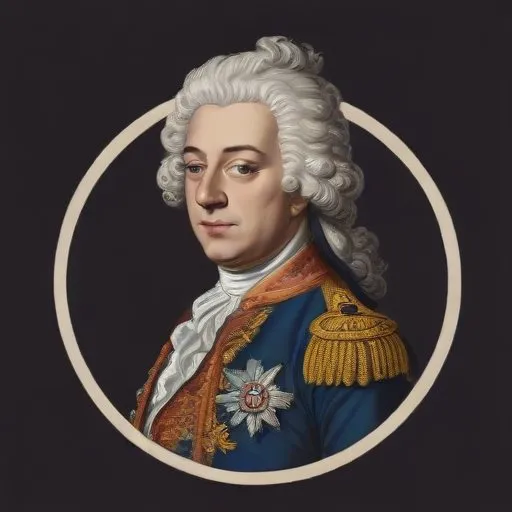
Augustus II, also known as Augustus the Strong, is renowned for being one of the most powerful monarchs of his time, ruling as the King of Poland and Grand Duke of Lithuania from 1697 to 1733, as well as the Elector of Saxony from 1694 to 1733. During his reign, he left an indelible mark on European politics, architecture, and culture.
Born on May 12, 1670, in Dresden, Saxony, Augustus II was the only son of John George III, Elector of Saxony, and Princess Anne Sophie of Denmark and Norway. As a young prince, Augustus was educated in the arts of war, politics, and diplomacy, which would serve him well in his future endeavors.
In 1694, Augustus succeeded his father as the Elector of Saxony, a position he would hold for nearly four decades. He quickly set his sights on the Polish throne, which had been vacant since the death of King John III Sobieski in 1696. After a series of complex negotiations and military campaigns, Augustus was crowned King of Poland and Grand Duke of Lithuania in 1697.
During his reign, Augustus II implemented numerous reforms and projects that transformed Poland and Saxony. He centralized power, reformed the taxation system, and strengthened the military. He also promoted education, arts, and culture, attracting renowned artists and intellectuals to his courts.
One of Augustus' most notable achievements was the development of Dresden, which became one of the most beautiful and prosperous cities in Europe during his reign. He commissioned grand architectural projects, including the Zwinger Palace, the Frauenkirche, and the Augustus Bridge, which still stand today as testaments to his vision and taste.
In addition to his domestic achievements, Augustus played a key role in European politics, forging alliances with powerful nations like Austria and Russia to secure Poland's borders and interests. He was also a skilled military leader, leading his armies to several victories against the Ottoman Empire and Sweden.
Augustus II was known for his strong personality, intelligence, and charm, which earned him the respect and admiration of his contemporaries. He was a prolific builder and collector, amassing a vast collection of art, antiques, and curiosities that would form the basis of the Dresden State Art Collections.
In his personal life, Augustus was known for his numerous affairs and illegitimate children, earning him the nickname "Augustus the Strong." Despite his personal controversies, he remained a beloved and respected ruler, celebrated for his wisdom, generosity, and cultural achievements.
After his death on February 1, 1733, Augustus II left behind a lasting legacy, shaping the course of Polish and Saxon history for centuries to come. His contributions to architecture, art, and culture continue to inspire and delight visitors from around the world.
Through his remarkable achievements, Augustus II remains one of the most fascinating and influential figures of European history, a true testament to the power of vision, intelligence, and leadership.
Born in 1683
King of Great Britain and Ireland from 1727 to 1760, known for his military victories, particularly the Battle of Dettingen, and his role in the War of the Austrian Succession.
Born in 1683
King of Great Britain and Ireland from 1727 to 1760, known for his military victories, particularly the Battle of Dettingen, and his role in the War of the Austrian Succession.
Born in 1765
The third son of King George III, he unexpectedly inherited the throne and reigned from 1830 to 1837, notable for abolishing slavery in the British Empire.
Born in 1738
The British monarch who ruled during the American Revolution, losing the colonies, and later suffered a mental illness that led to a regency crisis. He's also known for his cultural and artistic patronage.
Born in 1657
King of Prussia from 1701 to 1713, crowned himself king, and established Berlin as his capital, transforming Prussia into a major power. He's known for his cultural and economic reforms.
