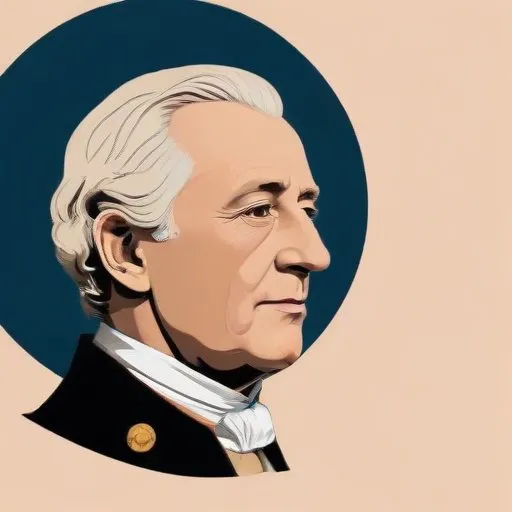
Augustus Keppel, 1st Viscount Keppel: The Distinguished Admiral and Politician
A Legacy of Bravery and Controversy
Augustus Keppel, 1st Viscount Keppel, is renowned as a British Royal Navy officer and politician who left an indelible mark on British history. With a career spanning over four decades, Keppel is credited with serving as Commodore on the North American Station, Commander-in-Chief of the Jamaica Station, Senior Naval Lord, and Commander-in-Chief of the Channel Fleet, making him a dominant figure in the British naval scene during the 18th century.
Early Life and Education
Born on April 25, 1725, to a prominent Whig aristocratic family, Keppel's lineage was steeped in nobility. His father, Willem van Keppel, 2nd Earl of Albemarle, and mother, Anne van Keppel, daughter of the 1st Duke of Richmond (an illegitimate son of King Charles II), ensured that Keppel was destined for greatness. Educated briefly at Westminster School, Keppel's maritime journey began at the tender age of ten, and by the time he was 15, he had already accumulated five years of service.
Notorious Dispute and Controversy
One of the most infamous episodes in Keppel's career was his dispute with Sir Hugh Palliser, his second-in-command, during the inconclusive Battle of Ushant in July 1778. This controversy led to both Keppel and Palliser facing courts-martial, which ultimately acquitted them of any wrongdoing. This dramatic turn of events not only put Keppel's leadership under scrutiny but also sparked a heated debate about naval tactics and politics.
Key Appointments and Achievements
- Commodore on the North American Station during the Seven Years' War
- Commander-in-Chief of the Jamaica Station
- Senior Naval Lord
- Commander-in-Chief of the Channel Fleet
- First Lord of the Admiralty during the American Revolutionary War
Lifetime of Service and Legacy
Throughout his life, Keppel demonstrated unwavering dedication to his country and the British Royal Navy. His tireless efforts earned him the respect and admiration of his peers, as well as recognition from the British monarchy. Upon his death on October 2, 1786, Keppel left behind a legacy of bravery, controversy, and service, cementing his place as one of the most influential figures in British naval history.
Personal Milestones and Key Life Events
- Briefly educated at Westminster School
- Joined the British Royal Navy at the age of 10
- Circumnavigated the globe with Lord Anson in 1740
- Promoted to acting lieutenant in March 1742
- Faced courts-martial alongside Sir Hugh Palliser in 1778
Trivia and Fun Facts
- Keppel lost several teeth to scurvy during his circumnavigation of the globe.
- He made lifelong friends with John Campbell during his voyage with Lord Anson.
Historical Context and Legacy
Augustus Keppel, 1st Viscount Keppel, navigated the tumultuous waters of 18th-century British politics and naval warfare, leaving behind a legacy that continues to intrigue historians and enthusiasts alike. His remarkable career serves as a testament to the complexities of human nature, where bravery, controversy, and dedication intertwined to forge a truly remarkable individual.
FAQ
What was Augustus Keppels role in the British Navy?
Augustus Keppel was a prominent naval officer and politician, and his role in the British Navy included his service as Admiral of the Fleet and his command of naval forces during the American Revolution.
How did Augustus Keppel become 1st Viscount Keppel?
Augustus Keppel became 1st Viscount Keppel after his victory in the Battle of Ushant in 1778, and he was rewarded for his service to the British Crown.
What were Augustus Keppels most notable naval victories?
Augustus Keppels most notable naval victories include his victory in the Battle of Ushant and his command of naval forces during the American Revolution.
What was Augustus Keppels relationship with King George III?
Augustus Keppel was a close advisor to King George III, and he played a key role in the kings government.
What were Augustus Keppels accomplishments as a politician?
Augustus Keppels accomplishments as a politician include his service as First Lord of the Admiralty and his role in shaping British naval policy.