


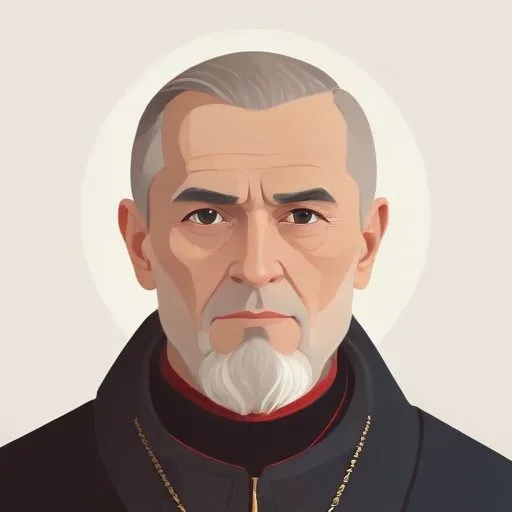
A 17th-century Russian Orthodox priest who led a movement to preserve traditional practices and was exiled to Siberia for his defiance, becoming a symbol of resistance against church reforms.
Avvakum Petrov, a 17th-century Russian Old Believer and protopope of the Kazan Cathedral, is renowned for his unwavering opposition to the reforms of the Russian Orthodox Church led by Patriarch Nikon. His unrelenting stance against the reforms, coupled with his remarkable literary works, has earned him a place in the annals of Russian history.
Born on November 20, 1620, in Grigorovo, Nizhny Novgorod, Avvakum was ordained as a priest in 1642 and quickly rose through the ranks of the Russian Orthodox Church. His exceptional oratory skills and profound understanding of theology earned him the respect and admiration of his peers.
In 1652, Patriarch Nikon introduced a series of reforms aimed at aligning the Russian Orthodox Church with the Eastern Orthodox Churches of Eastern Europe and the Middle East. Avvakum vehemently opposed these reforms, viewing them as a corruption of the Russian Church and a threat to its autonomy. He believed that the reforms would lead to the downfall of the Russian Church, citing the example of Constantinople, which had fallen to the Turks due to its heretical beliefs and practices.
Avvakum's vocal opposition to the reforms led to his repeated imprisonment and exile. In 1653, he was exiled to Siberia, where he participated in an exploration expedition to the Chinese border. After Nikon's fall from power, Avvakum was allowed to return to Moscow in 1664, only to be exiled again to Mezen. He was temporarily recalled to Moscow for the Church Council of 1666-1667 but was subsequently exiled to Pustozyorsk, above the Arctic Circle, where he spent the last fourteen years of his life in a pit or log-framed hut.
Avvakum's autobiography and letters to the tsar and other Old Believers, such as Boyarynya Morozova, are considered masterpieces of 17th-century Russian literature. His writings provide a unique insight into the tumultuous era of the Russian Orthodox Church and offer a testament to his unwavering commitment to his beliefs.
In 1682, Avvakum and his accomplices were executed by being burned in a log house. The spot where he was martyred has been commemorated by an ornate wooden cross, serving as a poignant reminder of his sacrifice for the sake of his faith.
Avvakum's life and writings have had a profound impact on Russian literature and history. His autobiography is considered one of the earliest and most important examples of Russian literature, offering a unique window into the country's tumultuous past. His legacy continues to inspire generations of Russians, cementing his place as a national hero and a symbol of unwavering dedication to one's beliefs.
Born in 1577
Led a Russian uprising against Polish occupation, earning him a heroic status in Russian history. He's remembered for his bravery and strategic leadership during the Time of Troubles.
