


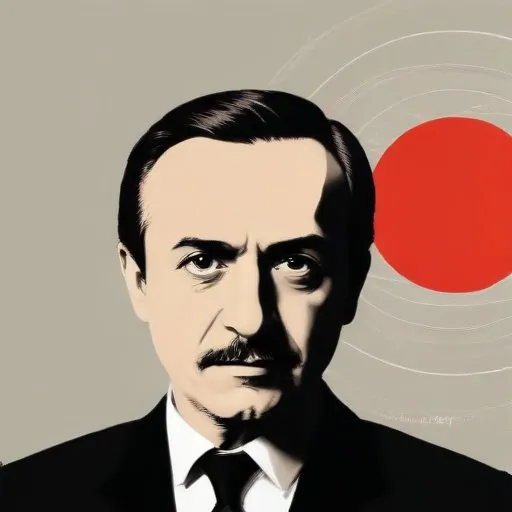
Leading Turkish seismologist who pioneered research on earthquake fault lines and plate tectonics, significantly advancing the field of seismology.
Aykut Barka, a Turkish geoscientist, left an indelible mark on the field of seismology with his groundbreaking contributions to understanding the behavior of the North Anatolian Fault Zone (NAFZ), one of the most dangerous active faults in the world. His work illuminated the complex dynamics of the NAFZ, providing critical insights that would later prove prophetic in the face of devastating earthquakes.
Born on December 16, 1951, in Fatih, Istanbul, Barka's academic pursuits took him to the University of Bristol, UK, where he earned his PhD in 1981 under the supervision of Dr. P.L. Hancock. His thesis, "Seismotectonic Aspects of the North Anatolian Fault Zone," laid the foundation for his future research endeavors.
Barka's career spanned esteemed institutions worldwide, including the Institut de Physique du Globe de Paris, École Normale Supérieure Paris, MIT's Earth Resources Laboratory, Cambridge, MA, University of Bristol, UK, and the Geological Survey of Japan. This exposure enabled him to engage with a diverse range of experts, fostering a comprehensive understanding of geosciences.
In 1997, Barka co-authored a seminal paper with Ross Stein and James H. Dieterich of the USGS, titled "Progressive failure on the North Anatolian Fault since 1939 by earthquake stress triggering." This study revealed the migration of large earthquakes and the accumulation of positive stress in the Marmara Region. Tragically, only two years later, the M7.4 1999 İzmit earthquake struck, claiming over 17,000 lives.
Aykut Barka's untimely passing on February 1, 2002, following a car accident, left a void in the scientific community. However, his work continues to inspire and inform researchers, policymakers, and the public alike. His contributions have enabled a better understanding of seismic activity, ultimately saving countless lives and shaping the course of disaster preparedness and mitigation strategies.
Behind the scientist was a devoted family man, who left behind a wife and two young children. Barka's personal and professional endeavors serve as a testament to his unwavering dedication to advancing our knowledge of the Earth's intricate dynamics.
Aykut Barka's pioneering research has left an indelible mark on our understanding of seismology, inspiring future generations to continue exploring the complexities of the Earth's system.
