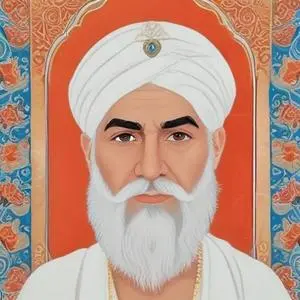
Bahá'u'lláh: The Prophet of Unity and Social Reform
A Life Dedicated to Spiritual Renewal and Social Justice
Bahá'u'lláh, born Mírzá Husayn-'Alí Núrí, is revered by millions as the founder of the Bahá'í Faith, a religion that emphasizes unity, love, and social justice. He is known for his profound spiritual teachings, which have inspired a global community to work towards a more equitable and peaceful world.
A Turbulent Early Life
Born in 1817 in Tehran, Iran, Bahá'u'lláh was a member of the aristocratic Núrí family. His father, Mírzá Buzurg, was a minister in the court of the Shah of Iran, and his family was known for its literary and philosophical pursuits. However, Bahá'u'lláh's early life was marked by tragedy, including the execution of his father and the confiscation of his family's properties.
The Call to Prophecy
In 1844, Bahá'u'lláh became a follower of the Báb, a Persian prophet who preached the coming of a new era of spiritual renewal. When the Báb was martyred in 1850, Bahá'u'lláh became the leader of the Bábí movement, which was characterized by its emphasis on social justice, gender equality, and the abolition of slavery. Over the next several decades, Bahá'u'lláh was imprisoned, exiled, and persecuted for his teachings, but he continued to write extensively on spiritual and social reform.
The Teachings of Bahá'u'lláh
Bahá'u'lláh's teachings emphasize the unity of all religions, the equality of women and men, and the importance of education, science, and technology. He advocated for the abolition of all forms of prejudice, including racism, nationalism, and religious intolerance. His writings also stress the need for a global governance system that promotes peace, justice, and collective security.
A Life of Exile and Persecution
Bahá'u'lláh was exiled to Baghdad in 1853, where he began to write his most famous work, the Kitáb-i-Aqdas, which outlines the laws and principles of the Bahá'í Faith. He was later exiled to Constantinople and eventually to the prison city of Akká, in what is now Israel, where he remained until his passing in 1892.
A Lasting Legacy
Today, the Bahá'í Faith is practiced by over 5 million people in more than 100,000 localities around the world. Bahá'u'lláh's teachings have inspired a wide range of social and economic development projects, including education initiatives, health programs, and rural development projects.
Quotes and Memorable Sayings
- "The earth is but one country, and mankind its citizens."
- "So powerful is the light of unity that it can illuminate the whole earth."
- "The purpose of God in creating man was to enable him to know and love God."
Influence on Modern Society
Bahá'u'lláh's teachings have had a profound impact on modern society, inspiring efforts towards global unity, social justice, and environmental protection. His emphasis on the importance of education and science has contributed to the development of sustainable development programs and initiatives around the world.
Historical Context and Legacy
Bahá'u'lláh's life and teachings must be understood within the context of 19th-century Iran, where social and religious reform was urgently needed. His legacy continues to inspire people around the world to work towards a more just and peaceful world.
Awards and Honors
In 2008, the United Nations Educational, Scientific and Cultural Organization (UNESCO) recognized Bahá'u'lláh as a "Messenger of Peace" and a "Champion of Human Rights." His teachings continue to inspire people around the world to work towards a more peaceful and just society.