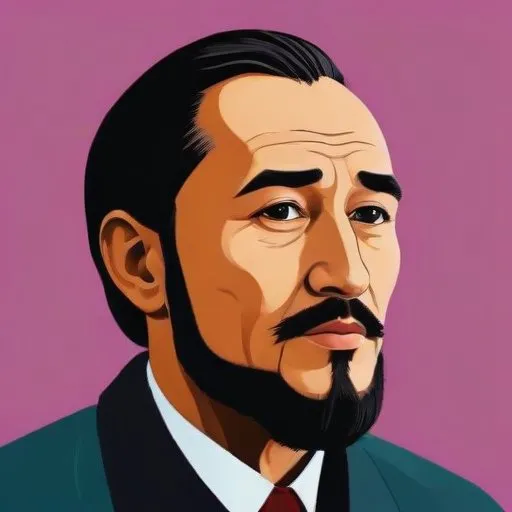
Bakhytzhan Kanapyanov: Celebrated Kazakhstani Poet and Writer
A Multicultural Literary Icon
Bakhytzhan Kanapyanov is a renowned Kazakhstani poet, writer, publisher, and translator, recognized for his profound impact on Kazakh and Russian literature. With a career spanning over four decades, Kanapyanov has authored more than thirty books of poetry and prose, earning him widespread acclaim for his multicultural approach.
Early Life and Education
Born on October 4, 1951, in Kokshetau, Kazakhstan, Kanapyanov grew up in a family of teachers. He attended school in the village of Sirimbet, where the family estate of the scholar and historian Chokan Valikhanov, a relative of the poet's ancestors, was located. After completing his initial education, Kanapyanov became a metallurgical engineer. He later pursued higher courses for directors and screenwriters in Moscow, studying under the guidance of Emil Lotianu, and subsequently attended higher literary courses at the Association of Writers of the USSR, led by Alexander Mezhirov.
A Prolific Literary Career
Kanapyanov's literary journey began in the 1970s, when he published his introductory poems in the magazine
SpaceProstor. He went on to publish poetry and prose in periodicals around the world, exploring themes that resonated with readers from diverse cultural backgrounds. His works have been translated into multiple languages, including English, French, Polish, and Turkish, solidifying his reputation as a literary ambassador.
Membership and Honors
Kanapyanov is a member of the Russian and Kazakh PEN clubs, and has been honored with the title of Academic of Journalism in Kazakhstan. He is also an honorary professor at the Shakarima University in Semipalatinsk and an academician of the Crimean Literary Academy in Simferopol, Crimea.
Influence and Legacy
Bakhytzhan Kanapyanov's contributions to Kazakh and Russian literature have inspired a new generation of writers and poets. His commitment to promoting cultural understanding and exchange has earned him recognition as a champion of multiculturalism. Through his works, he continues to foster a deeper appreciation for the richness and diversity of Kazakh culture, ensuring his legacy as a literary icon.
Personal Milestones and Key Life Events
- In 1971, Kanapyanov met Olzhas Suleimanov, a poet and writer, whose influence had a profound impact on the young poet's future.
- Kanapyanov worked as a research engineer at the Institute of Metallurgy of the Academy of Sciences of the Kazakh SSR and as a screenwriter, director, and editor in the film studios Kazakhfilm and Mosfilm.
Quotes and Memorable Sayings
"To me, poetry is a bridge that connects people across cultures, languages, and borders."
" Literature knows no borders, and neither should our imagination."
Impact on Modern Society
Bakhytzhan Kanapyanov's literary works have had a significant impact on modern society, promoting cultural understanding, tolerance, and exchange. His commitment to multiculturalism has inspired a new generation of writers and readers, fostering a deeper appreciation for the diversity of Kazakh culture.
FAQ
What is Bakhytzhan Kanapyanovs significance in Kazakh literature?
Bakhytzhan Kanapyanov is a celebrated Kazakh poet and author, known for his contributions to Kazakh literature and his exploration of themes such as love, nature, and national identity.
What kind of poetry does Bakhytzhan Kanapyanov write?
Bakhytzhan Kanapyanov writes lyrical poetry, often focusing on the beauty and mystery of the natural world and the human experience.
What awards has Bakhytzhan Kanapyanov won?
Bakhytzhan Kanapyanov has won multiple awards for his writing, including the prestigious Auezov State Prize for Literature and Art.
What is Bakhytzhan Kanapyanovs background?
Bakhytzhan Kanapyanov was born in rural Kazakhstan and grew up in a family of modest means, eventually studying literature and philosophy at university.
What is Bakhytzhan Kanapyanovs approach to writing?
Bakhytzhan Kanapyanov is known for his use of rich, evocative language and his exploration of themes such as love, nature, and national identity.