


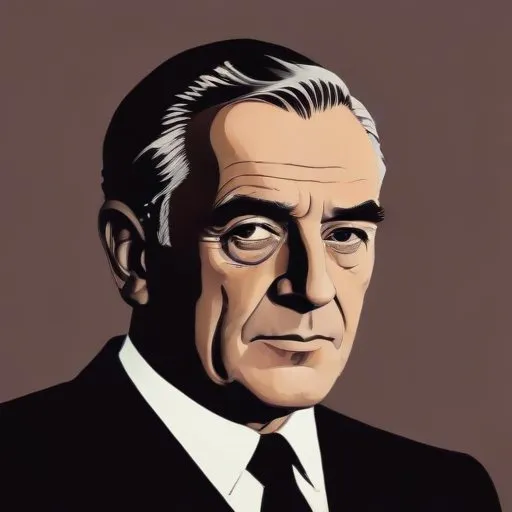
A pioneering filmmaker who brought socially conscious stories to the big screen, tackling topics like racism and homosexuality in a time when it was rare to do so.
Basil Dearden, born Basil Clive Dear, was a renowned English film director, producer, and screenwriter who left an indelible mark on British cinema. With a career spanning over three decades, Dearden is best known for his work on "Dead of Night," a groundbreaking 1945 horror anthology that set the tone for the genre.
Born on January 1, 1911, in Leigh-on-Sea, Essex, Dearden was the son of Charles James Dear, a steel manufacturer, and his wife, Florence (née Tripp). He graduated from theatre direction to film, working as an assistant to Basil Dean, a prominent film producer and director. To avoid confusion with his mentor, Dearden changed his surname to Dearden.
Dearden's early work in the film industry included writing "This Man Is News" (1938), a quota quickie that became a huge success. He wrote and directed a film for TV, "Under Suspicion" (1939), and worked as an assistant director on several films, including "Penny Paradise" (1938) and two George Formby comedies, "George Takes the Air" (1938) and "Come on George" (1939).
In the early 1940s, Dearden joined Ealing Studios, where he produced "The Ghost of St. Michael's" (1941) with Will Hay and "Turned Out Nice Again" (1941) with George Formby. He began directing at Ealing, codirecting comedy films with Will Hay, including "Black Sheep of Whitehall" (1942) and "The Goose Steps Out" (1942). Dearden's first solo director credit was "The Bells Go Down" (1943), a wartime movie starring Tommy Trinder.
"Dead of Night" (1945): A horror anthology that consists of five segments, each with a different director. Dearden directed the linking narrative and the "Hearse Driver" segment.
"The Captive Heart" (1946): A drama starring Michael Redgrave, which became a major hit.
"They Came to a City" (1944): A drama based on a play by J.B. Priestley, which Dearden wrote and directed.
"The Halfway House" (1944): A drama set in Wales, which Dearden directed.
Basil Dearden's contributions to British cinema are undeniable. He played a significant role in shaping the industry, working with notable directors, producers, and actors of his time. Dearden's work continues to influence filmmakers and horror enthusiasts alike, cementing his place as a pioneering figure in the world of cinema.
Dearden received the BAFTA Award for Best British Film for "Sapphire" (1959). He was also nominated for the Academy Award for Best Original Screenplay for "The Man Who Fell to Earth" (1959).
Basil Dearden died on March 23, 1971, at the age of 60, leaving behind a legacy of iconic films and a lasting impact on the film industry.
Through his work, Basil Dearden continues to inspire and entertain audiences, solidifying his place as a British cinematic legend.
Born in 1921
A renowned actor and author, known for his iconic roles in British cinema, particularly in the 1960s, and for his literary works that explored themes of love, identity, and mortality.
89 Years Old
A highly acclaimed and award-winning actress, renowned for her powerful performances on stage and screen, particularly in dramatic and socially conscious roles.
Born in 1909
A renowned actor, producer, and screenwriter, he brought iconic characters to life in films like "North by Northwest" and "20,000 Leagues Under the Sea".
Born in 1908
A renowned English actor, celebrated for his iconic performances in British cinema, particularly in war dramas and literary adaptations. He won an Academy Award for Best Actor for his portrayal of a disabled veteran in "Ryan's Daughter".
Born in 1923
A renowned actor, director, and producer who brought iconic films like "Gandhi" and "Jurassic Park" to life, earning numerous awards and accolades.
Born in 1914
A renowned actor who brought iconic characters to life on screen, including Obi-Wan Kenobi in the Star Wars franchise.
