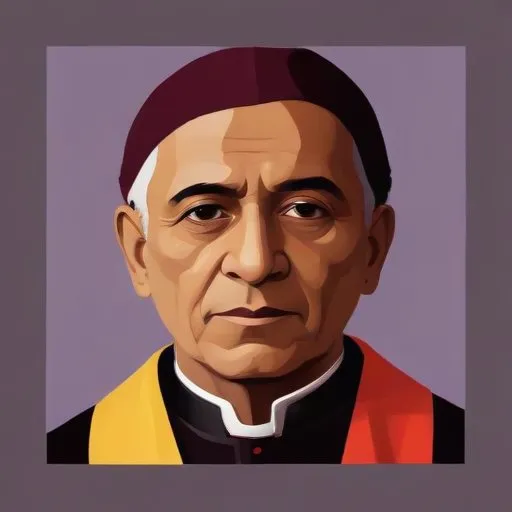
Basil Salvadore DSouza: A Beacon of Progressive Catholicism
A Maverick Bishop and a Trailblazer
Basil Salvadore DSouza, the longest-serving bishop of the Roman Catholic Diocese of Mangalore, left an indelible mark on the Catholic Church in India. From 1965 until his passing in 1996, he championed progressive reforms, introducing vernacular services and translating liturgical texts into Konkani, making the Church more accessible to the masses.
Early Life and Priesthood
Born on May 23, 1926, in Bondel, Mangalore, DSouza was the eldest of seven children to a Mangalorean Catholic couple, Diego and Maria DSouza. His family, belonging to the DSouza-Kamath clan, lived a humble life, relying on income from cultivating betel leaves. Ordained into the priesthood on March 25, 1952, DSouza went on to manage the Catholic Board of Education and serve at the Kodialbail Press.
A Bishop Ahead of His Time
DSouza's appointment as the Bishop of Mangalore Diocese on March 22, 1965, marked the beginning of a new era. He was consecrated on May 11, 1965, by Archbishop James Robert Knox, papal nuncio in India. As one of the few participants in the final sessions of the Second Vatican Council (1962-1965), DSouza was instrumental in implementing the Council's renewal, becoming the first Indian bishop to do so. He introducedKonkani-language services, making the Church more inclusive and relevant to the local community.
Visionary Leadership and Reforms
During his tenure, DSouza established several new parishes, mainly in remote villages, and institutions like family guidance centers. He played a crucial role in welcoming
Pope John Paul II during his historic visit to Mangalore on February 6, 1986. His-forward thinking approach led to the translation of the Bible and other liturgical texts into Konkani, further bridging the gap between the Church and the people.
Legacy and Impact
Basil Salvadore DSouza's remarkable 31-year tenure as the Bishop of Mangalore Diocese has left a lasting impact on the Catholic Church in India. His commitment to progressive reforms, vernacular services, and community development has inspired generations of clergy and laity alike. His legacy serves as a testament to the power of visionary leadership and the importance of adapting to the changing needs of the faithful.
Quotes and Memorable Sayings
- "The Church must speak the language of the people, not just the language of the elites."
- "Our mission is not just to preach, but to serve the poorest of the poor."
Awards and Honors
In recognition of his outstanding contributions, DSouza received numerous awards and honors, including the
Papal Honor of Monsignor and the
.
FAQ
What is Basil Salvadore DSouzas role in the Indian Catholic Church?
Basil Salvadore DSouza was a prominent bishop in the Indian Catholic Church, serving as the Bishop of Mangalore from 1965 to 1996. He played a significant role in shaping the Churchs policies and practices in India.
What are Basil Salvadore DSouzas views on social justice?
DSouza was a strong advocate for social justice, particularly in the context of Indias caste system. He worked to promote interfaith dialogue and understanding, and supported initiatives that addressed poverty, inequality, and human rights.
What is Basil Salvadore DSouzas connection to the Catholic Bishops Conference of India?
DSouza was an active member of the Catholic Bishops Conference of India, which represents the Catholic Church in India. He played a key role in shaping the conferences policies and initiatives on issues such as education, healthcare, and social welfare.
What are Basil Salvadore DSouzas contributions to Catholic education in India?
DSouza was a strong supporter of Catholic education in India, recognizing its importance in promoting social mobility and equality. He worked to establish and promote Catholic schools, colleges, and universities in the region.
What is Basil Salvadore DSouzas legacy in the Indian Catholic Church?
DSouzas legacy in the Indian Catholic Church is one of service, compassion, and advocacy. He is remembered for his tireless work in promoting social justice, interfaith dialogue, and education, leaving a lasting impact on the Church and Indian society.