


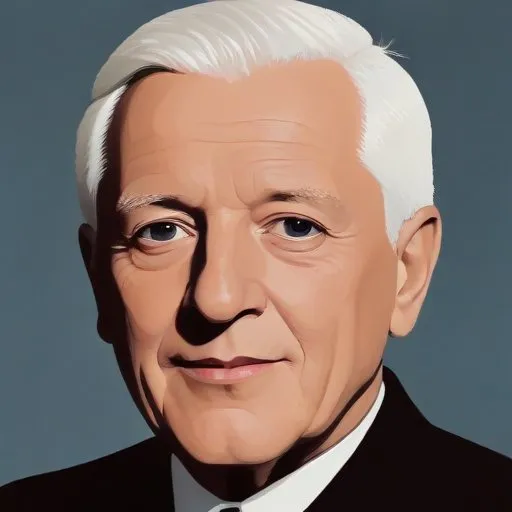
Developed the concept of "imagined communities" to understand nationalism and its role in shaping modern societies through print media and collective identity.
Benedict Anderson, a renowned Anglo-Irish political scientist and historian, is best known for his groundbreaking work, "Imagined Communities," which delves into the intricacies of nationalism and its role in shaping modern societies. This seminal book, published in 1983, has become a cornerstone of academic discourse, influencing generations of scholars and thinkers.
Anderson's academic journey began at Eton College, where he developed a passion for history and politics. He later pursued his higher education in the United States, becoming a naturalized citizen in 1982.
In "Imagined Communities," Anderson posits that nations are not natural entities, but rather constructed communities created by shared cultural, linguistic, and historical experiences. He argues that the rise of nationalism is closely tied to the development of print media, which enabled people to imagine themselves as part of a larger, interconnected community.
Anderson's academic interests extended beyond nationalism to Southeast Asia, where he became proficient in several languages, including Indonesian, Thai, and Vietnamese. His work on the region led to his appointment as the Aaron L. Binenkorb Professor of International Studies, Government, and Asian Studies at Cornell University.
In the 1960s, Anderson's research on the Cornell Paper, which disputed the official account of Indonesia's 30 September Movement and subsequent anti-communist purges, led to his expulsion from Indonesia. This experience not only highlighted the risks of academic inquiry but also underscored the significance of critical thinking in understanding complex political events.
Born on August 26, 1936, in Kunming, China, to an Anglo-Irish father and English mother, Anderson's early life was marked by global turmoil. His family moved to California in 1941 to escape the Japanese invasion and later to Ireland in 1945. Anderson's elder brother, Perry Anderson, is also a renowned historian.
Anderson's work has far-reaching implications for our understanding of modern societies, nationalism, and global politics. His ideas have inspired scholars, policymakers, and activists, influencing the way we think about identity, culture, and power.
Anderson's philosophical contributions lie in his critique of nationalist ideologies and his emphasis on the constructed nature of national identities. He believed that understanding the imagined aspects of communities could help mitigate the negative consequences of nationalism, such as xenophobia and exclusion.
Benedict Anderson's work has left an indelible mark on the fields of political science, history, and anthropology. His ideas continue to shape academic discourse, informing our understanding of the complex dynamics that shape modern societies.
Anderson received numerous awards and honors for his contributions to academia, including the Fukuoka Asian Culture Prize in 2001.
Benedict Anderson passed away on December 13, 2015, leaving behind a rich legacy of academic work and a deeper understanding of the complexities of nationalism and modern societies.
Born in 1917
A renowned historian and author who wrote extensively on the rise of industrial capitalism and the development of socialist and communist movements in the 19th and 20th centuries. His works provide insightful perspectives on modern history and its complexities.
