


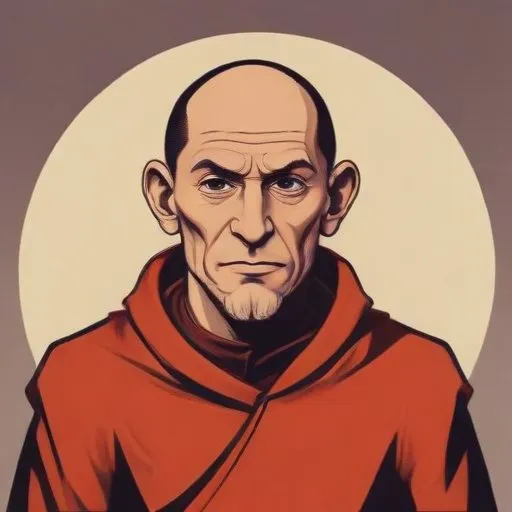
A Spanish monk and scholar who wrote extensively on various subjects, including science, philosophy, and literature, and is considered one of the most important figures of the Spanish Enlightenment. He is known for his critical thinking and skepticism, which helped to modernize Spanish culture and education.
Benito Jerónimo Feijoó y Montenegro, a Spanish monk and scholar, is renowned for spearheading the Age of Enlightenment in Spain, debunking myths and superstitions through his tireless efforts to promote scientific and empirical thought. His remarkable contributions to education, philosophy, and literature have left an indelible mark on Spanish history, earning him recognition as one of the country's most influential thinkers.
Feijoó's journey began at the tender age of 14, when he joined the Benedictine order. He went on to study in Galicia, León, and Salamanca, honing his skills in theology and philosophy. His academic prowess earned him a professorship in theology at the University of Oviedo, where he taught for many years. Feijoó's passion for knowledge and education drove him to combat the ignorance and superstition that plagued his era.
Feijoó's works aimed to dispel myths and misconceptions, spreading scientific knowledge and critical thinking throughout Spain. His writings sparked a flurry of reactions, with some critics opposing his views, including Salvador José Mañer and others. However, Feijoó's tireless efforts ultimately prevailed, earning him widespread recognition for his contributions to education and knowledge.
Feijoó's magnum opus, Teatro Crítico Universal, is a comprehensive, nine-volume collection of essays that encompassed a broad range of subjects, from natural history and sciences to education, history, literature, and philosophy. This monumental work showcases Feijoó's mastery of various fields and his commitment to disseminating knowledge. His other notable work, Cartas Eruditas y Curiosas, is a five-volume collection of essays that delve into the intricacies of science, philosophy, and literature.
Feijoó's groundbreaking work paved the way for future generations of scholars, thinkers, and educators. His emphasis on critical thinking, scientific inquiry, and empirical evidence helped shape the intellectual landscape of Spain, earning him the distinction of being the initiator of educational reform in the country. Almost a century after his passing, Alberto Lista aptly observed that Feijoó's works should be celebrated, rather than criticized, for their immense value to the cause of knowledge and education.
Feijoó's contributions to education, literature, and philosophy have had a profound impact on Spanish society. His emphasis on critical thinking, scientific inquiry, and empirical evidence helped shape the country's intellectual landscape, paving the way for future generations of thinkers and scholars. Today, Feijoó is recognized as a pioneering figure in the Age of Enlightenment, his works continuing to inspire and educate scholars around the world.
In conclusion, Benito Jerónimo Feijoó y Montenegro's remarkable life and works have left an indelible mark on Spanish history, cementing his place as one of the country's most influential thinkers and educators. His tireless efforts to promote scientific knowledge, critical thinking, and education have inspired generations, ensuring his legacy as a beacon of Enlightenment values.
Born in 1491
Founded the Jesuit Order, a Catholic religious organization known for its missionary and educational work, and developed the Spiritual Exercises, a guide for spiritual growth and discernment.
Born in 1506
Co-founder of the Society of Jesus, a Catholic religious order, known for his missionary work in Asia, especially in India and Japan, and for his role in the Counter-Reformation. He's revered for his tireless efforts to spread Christianity and his compassion for the poor and marginalized.
Born in 1515
A 16th-century Spanish mystic and writer who introduced reforms to the Carmelite Order, promoting contemplative prayer and spiritual growth. Her writings are still widely read today.
Born in 1581
A 17th-century French priest dedicated his life to serving the poor and marginalized, establishing a congregation of priests and nuns to provide aid and comfort to those in need. He's revered for his selfless charity and compassion.
Born in 1538
A 16th-century Italian reformer who played a key role in the Counter-Reformation, implementing significant reforms within the Catholic Church, and was known for his piety and charitable works.
Born in 1542
A 16th-century theologian and doctor of the Church, known for his writings on spirituality and his role in shaping Catholic doctrine. He was a key figure in the Counter-Reformation, defending Catholicism against Protestantism.
Born in 1559
A 16th-century Capuchin friar and Doctor of the Church, known for his exceptional preaching and writing skills, which helped to convert many to Christianity. He played a key role in the Counter-Reformation, strengthening the Catholic Church during a tumultuous period.
