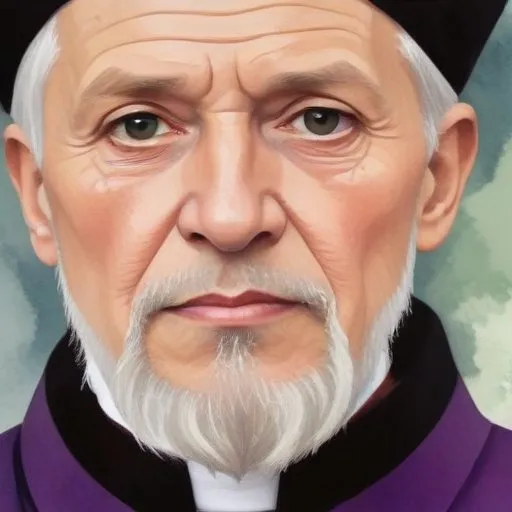
The Polymath of the Enlightenment: Benjamin Franklin
American Founding Father and Renaissance Man
Benjamin Franklin was a true giant of the Enlightenment, a polymath whose contributions to American history, science, literature, and politics are still felt today. As one of the Founding Fathers of the United States, he played a leading role in drafting the Declaration of Independence and the United States Constitution.
Early Life and Career
Born on January 17, 1706, in Boston, Massachusetts, Franklin was the 15th of 17 children to Josiah Franklin, a candlemaker, and his wife, Abiah Folger Franklin. Despite his limited formal education, Franklin's voracious appetite for learning and his passion for writing led him to become an accomplished journalist, printer, and writer. In 1728, he founded the Pennsylvania Gazette, which became one of the most widely read newspapers in the colonies.
Scientific Contributions
Franklin's most notable scientific contribution was his groundbreaking work in electricity. His famous experiment with a kite in a thunderstorm led to the invention of the lightning rod, which protected buildings from lightning strikes. He also proposed the concept of positive and negative electric charges and coined the terms "battery," "conductor," and "insulator."
Philosophical Contributions and Beliefs
Franklin was a strong advocate for reason, individual liberty, and democracy. He believed in the power of education and self-improvement, as evident in his autobiography, which is still widely read today. His philosophical musings on morality, virtue, and the nature of humanity were influential in shaping American thought.
Personal Milestones and Key Life Events
- 1732: Founded the Library Company of Philadelphia, the first public library in the United States.
- 1748: Invented bifocal glasses, which revolutionized reading and vision correction.
- 1751: Elected to the Pennsylvania Provincial Assembly, where he served for over 20 years.
- 1775: Appointed Postmaster General for the colonies, a position he held for 21 years.
- 1785: Served as Minister to France, securing French support for the American Revolution.
- 1787: Played a key role in drafting the United States Constitution.
Influence on Modern Society
Franklin's impact on modern society is immeasurable. He was a true visionary who believed in the power of innovation, education, and democracy. His contributions to science, literature, and politics have inspired generations of Americans and continue to shape the country's values and ideals.
Quotes and Memorable Sayings
- "An investment in knowledge pays the best interest."
- "Early to bed and early to rise, makes a man healthy, wealthy, and wise."
- "We must, indeed, all hang together, or most assuredly we shall all hang separately."
Historical Context and Legacy
Benjamin Franklin's life and legacy are a testament to the power of curiosity, hard work, and dedication to the public good. As a true Renaissance man, he embodied the spirit of the Enlightenment, inspiring countless individuals to pursue knowledge, innovation, and civic engagement. Today, Franklin remains an beloved figure in American history, a symbol of the country's founding principles and values.
FAQ
What is Benjamin known for?
Benjamin was a Russian bishop and missionary known for his evangelistic work among the Native American populations of Alaska and the Pacific Northwest. He was a pioneering figure in the Orthodox Church in America.
What was Benjamins role in the Orthodox Church?
Benjamin played a key role in the Orthodox Church, serving as a bishop and missionary in Alaska and the Pacific Northwest. He was dedicated to spreading the Gospel and establishing Orthodox communities in the region.
What was Benjamins approach to missionary work?
Benjamins approach to missionary work was characterized by his sensitivity to local cultures and his emphasis on education and community-building. He worked to establish relationships with Native American leaders and to adapt Orthodox traditions to local contexts.
What was Benjamins impact on the Orthodox Church in America?
Benjamins impact on the Orthodox Church in America was significant, as he helped to establish a strong Orthodox presence in Alaska and the Pacific Northwest. His work laid the foundation for future generations of Orthodox missionaries and leaders.
What is Benjamins legacy?
Benjamins legacy is that of a dedicated missionary and bishop who worked tirelessly to spread the Gospel and build Orthodox communities in the Americas. He is remembered as a pioneering figure in the Orthodox Church in America.